As the upcoming Chinese New Year ushers in the Year of the Ox, could it be the year Asian economies power ahead? Franklin Templeton Investment Solutions’ Stephen Tong, Franklin Templeton Emerging Markets Equity’s Michael Lai, Western Asset Management’s Desmond Soon and Martin Currie’s Kim Catechis share their views
Ahead of the new lunar year, they weigh in on how investors might navigate Asian markets with the characteristics of the Chinese zodiac’s ox in mind, traditionally associated with patience, diligence and persistence. The ox is the second animal in the 12-year cycle of the Chinese zodiac. Its arrival on February 12, 2021, a year after COVID-19 came to light across the world, comes at a time where there is elevated uncertainty among investors over the pace of global growth. While a full global recovery is unlikely, there may be some potential bright spots in Asia.
Transition from Crisis Measures to Supporting Recovery Shines New Light on Asset Allocations
Stephen Tong, Client Portfolio Manager, Franklin Templeton Investment Solutions
“The global pandemic has pushed the global economy into a deep recession, though the market has widely factored in the expectation of a sharp economic rebound. There’s a huge divergence over the pace of global growth. The recovery path will likely be uneven, especially between the East and the West. We believe Asia is on a better path of recovery and that China in particular should be on track for a strong rebound and on-trend growth over the mid to long term. This is a reflection of the ox’s diligent role in Chinese agriculture.
“Central banks around the globe remain accommodative and maintain a “whatever it takes” attitude to keep interest rates low. We’ve been impressed at the targeted stimulus measures, particularly in China. The People’s Bank of China’s (PBOC’s) prudent response to the effects of COVID-19 last year freed up billions in reserve requirements for banks, which in turn funded loans to help the worst-hit companies from the virus outbreak. That said, it’s unlikely Chinese equities will lead the way alone, and we think the winners and losers may change depending on how quickly and effectively a vaccine can be rolled out. We’d expect opportunities to arise for some undervalued names.
“On the fixed income side, we’ll have to be more selective. A combination of low term premiums in contrast with continued easy monetary policy maintains a challenging environment for fixed income investors. But, emerging market fundamentals, especially within Asia, have improved in recent months as foreign demand offsets continued domestic weakness in certain economies. In our view, emerging market local currency bonds could become more attractive.”

Bonds Have More Room to Run
Desmond Soon, Head of Investment Management, Asia (ex-Japan), Portfolio Manager, Western Asset Management, part of Franklin Templeton Group
“One might consider 2020 to be the year of the poisoned rat, but as we enter the year of the ox, we have reasons to think we’ll see a stronger year marked by hard work. We generally have strong convictions on Asian currencies and local currency bonds. While flows into Asia dollar bonds had taken off significantly throughout last year, local fixed income bonds and equities have lagged, and we think they have room to catch up.
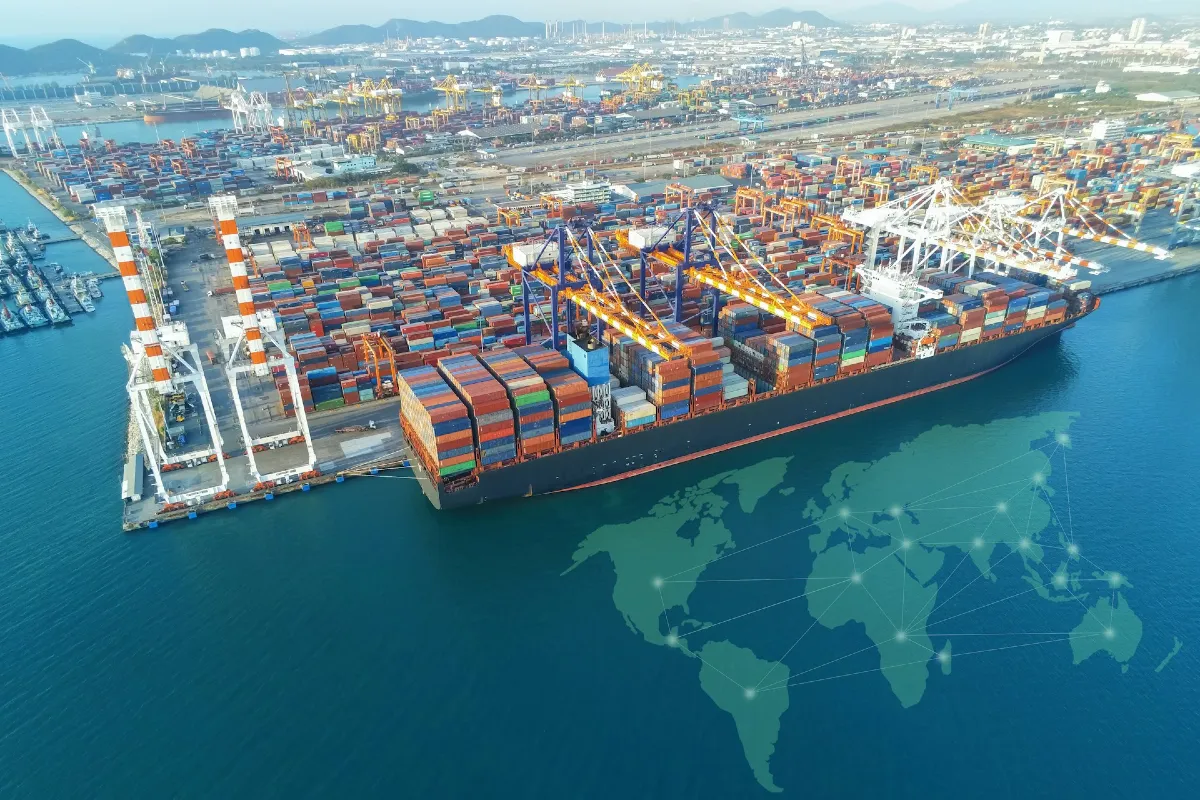
“A number of Asian economies are net-creditor nations, those that invest more in other countries than others invest in them. As major Western economies monetize their debt to support their economies from the financial effects of the global pandemic, local Asian economies and their currencies will likely be a sweet spot for 2021—particularly currencies that are linked to countries with strong export growth, in our view. Container prices have surged, particularly in Chinese ports—which illustrates this strength in exports. While pandemic-induced supply bottlenecks have played a role, this growth is due to overwhelming demand. Despite the encouraging evidence, we believe emerging market local currency debt remains underappreciated by investors, as seen in the chart below.

“Emerging market investors should be aware of the bipolarization of the investment landscape. China is not your average emerging market—it is the second-largest economy in the world. The sheer size of the Chinese bond market has led to demand for dedicated Chinese bond funds to provide market access for foreign investors to trade, settle and hold bonds tradable on the China Interbank Bond Market and Bond Connect (HK). However, given what happened in the United States under former President Trump, who sanctioned a list of Chinese companies, some investors remain hesitant on emerging market global indexes and prefer to consider China as a separate allocation within an emerging market portfolio. That said, Chinese bonds offer strong yield pickup for investors; the 10-year Chinese government bond today yields more than 3%, compared to the 10-year US Treasury at just over 1%.”
Fertile Ground for Patient Stockpickers
Michael Lai, Portfolio Manager, China Equities, Franklin Templeton Emerging Markets Equity
“As market expectations for a sharp rebound continue, geopolitics present an ongoing headwind for business investment decisions. In the United States, Joe Biden’s presidency seems to have calmed financial markets as investors enjoy much-needed clarity on many issues, along with the easing of US-China tensions. We saw a bit of a rebound in markets in January when Biden announced that he is open to “meeting China halfway,” with the general realization that China is a major strategic rival.
“In our view, China has handled the pandemic very well, and the strength of its economic recovery is unparalleled. The skill and speed at which authorities dealt with the pandemic resulted in a V-shaped recovery that we believe bodes well for continued strength in the year ahead. Chinese economic policy will likely focus on normalization throughout 2021, through monetary, fiscal or regulatory policy.

“In my 30 years of experience as a stockpicker, I’ve been amazed at the opportunities the Chinese equity market has presented to investors—the depth and breadth of the market has grown exponentially. China is relatively unique in that although it does not follow a liberal, market-oriented Western policy script, it nonetheless offers investors a diverse opportunity set.
“Digitisation, adoption of technology and further consolidation across certain industries should all feed into the long-term opportunities that we’ve long been watching unfold in China. More recently, the government’s commitment to achieving a carbon-neutral footprint within the next decade could throw up some interesting opportunities in the renewables space, as well as the new energy and electric vehicles sector.
“We’re particularly interested in so-called “new economy” stocks. The trajectory of companies that have harnessed technology to create online platforms from traditional brick-and-mortar businesses has ticked off some Chinese government initiatives—from lower transaction costs to reaching segments of society that previously did not have that access to goods and services. Looking ahead, the concept of digitization extends beyond the consumer section in terms of how we consider fifth-generation (5G) technology, as we think it could become a tailwind for other sectors to capture this opportunity, particularly in the industrials sector.
“While the ox can be stubborn, as we head into the new year, we’ll take a healthy dose of the ox’s most well-known quality: patience. As we continue to keep an eye on quality businesses with sustainable business models, we also anticipate ongoing Chinese initiatives that could bring fertile investment opportunities.”
What are the attributes of the Ox?
Kim Catechis, Head of Investment Strategy at Martin Currie, part of Franklin Templeton Group
“According to the Chinese horoscopes, these are: Diligence, Dependability, Strength, Determination, Patience, Belief in consistent effort, Detailed planning, Determination/stubbornness, Poor communication with others. These attributes can link to China and its current leadership in Beijing. Put simply, China’s game plan is to grow wealthier and assume its rightful role as the ‘Middle Kingdom’ it once was. Zhongnanhai, the seat of the leadership of the Chinese Communist Party, particularly wants to prove that its brand of communism can and does provide the structure to deliver a responsive government, a clean environment and economic wealth. The words ‘social justice’ appear to mean ‘stability’ and this can be enforced, if necessary.
“In some ways, the restructuring of the domestic Chinese economy away from a manufacturing industry and towards services renders the US tariffs less effective. Since 2013, Chinese GDP growth has increasingly been driven by the services sector and domestic consumption. That move to urbanise and raise the living standards of the rural population is set in place and this confrontation with the US will not derail it.
In that context, 2021 will bring a continued focus on the Big Themes for the Middle Kingdom:
- Climate Change related investment
- Gas and Renewables in power generation
- Health and Food security
- Self-sufficiency in technology
- Semiconductor production
- Communications, 5G, AI, Automation and Quantum Computing
- Growing China’s sphere of influence
- Leveraging the Belt & Road investments for geopolitical gain
- Assertive diplomacy
“The sectors that are vulnerable to geopolitical aggression are technology and finance. The less controversial ones, where there is a real need for both sides to continue to maintain the linkages are commodities and agricultural produce. In the domestic Chinese market, expect the same pressures to regulate Big Tech as we are seeing in the West – but more effective and quickly enacted. Nevertheless, Chinese consumer oriented businesses are of interest, as are the beneficiaries of the three broad themes named above.
“The reality is that Beijing and Washington, DC hold very different views of how the international order ought to work and as the US ratchets up the pressure, Beijing digs in. Bluntly, if the US and China cannot find a workable arrangement that supports the normal functioning of the international system, they will each line up their respective teams. Many countries will not be able to resist the call, because of their geographical proximity and economic linkages, like Mexico (for the US) or Pakistan (for China). Meanwhile the rest of the world is in limbo, pressured by both sides and trying to remain neutral.”