
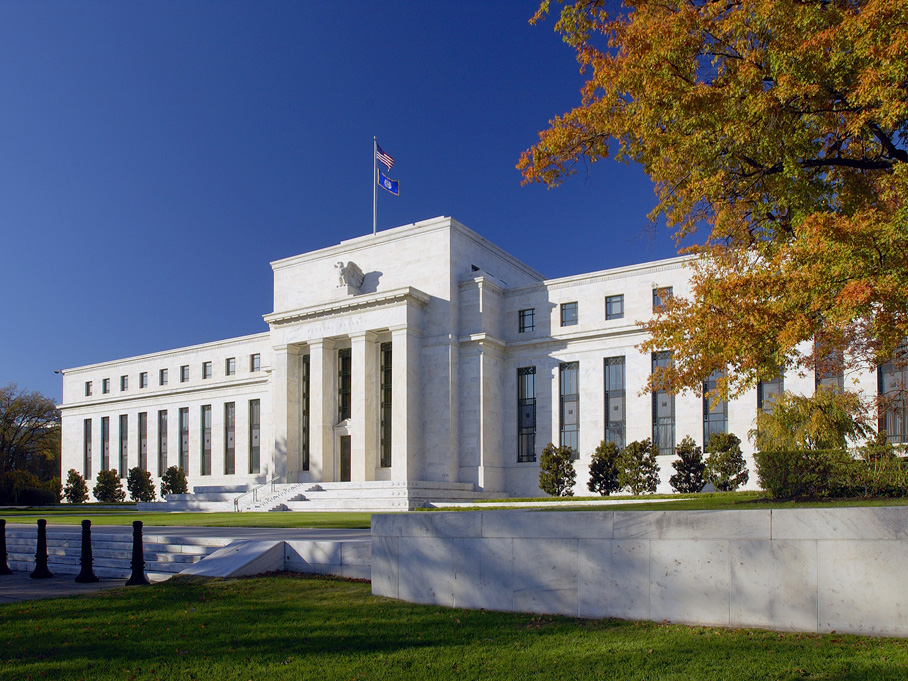
In a unanimous decision announced this evening, the US Federal Reserve has elected to keep US interest rates in the range 4.25%-4.5% – with an eye on inflation which remains ahead of the Fed’s target rate of 2%. The decision to ‘hold’ had been widely anticipated by market analysts but will it stir up trouble from the new administration?
In his statement following the FOMC announcement, Chair Powell said that the Fed remained focused on it’s dual-mandate goals of maximum employment and stable prices.
Lindsay James, investment strategist at Quilter Investors said: “The Federal Reserve’s decision to keep interest rates steady reflects a careful, data-driven approach in a time of increasing external pressures and market uncertainty. Despite calls from President Trump urging the Fed to cut rates more aggressively, the central bank has opted to hold its ground. Trump has been vocal in arguing that lower rates could spur growth by making borrowing cheaper for businesses and consumers. However, the Fed has stuck to its core mission of controlling inflation and ensuring maximum employment rather than responding to short-term political requests.
“This move comes amid a broader economic backdrop that remains challenging. Inflation is still well above the Fed’s 2% target, which makes the central bank wary of cutting rates too quickly. While inflation has slowed, many of Donald Trump’s policy proposals risk reigniting upward pressures. On top of that, the Fed must navigate ongoing market volatility, shifting global trade dynamics, and the unpredictable impact of new technologies like AI. The recent rise of DeepSeek, a Chinese hedge fund off-shoot, has contributed to this volatility, with its cost-effective AI models causing significant disruptions in tech stocks over the last week.
“By holding rates steady, the Fed is sending a clear message that it’s focused on long-term stability. This cautious approach underscores the need for balance—maintaining control over inflation while supporting sustainable economic growth. The Fed has indicated that it’s ready to adjust its policy as new data comes in, but for now, it seems committed to a careful, well-reasoned strategy that resists both political pressure and short-term market fluctuations.“
Commenting on the US Fed interest rate decision, Kambiz Kazemi, Chief Investment Officer at Validus Risk Management, said: “In the first round of the monetary policy standoff between President Trump and the Federal Reserve, the Fed resisted Trump’s push to lower interest rates. In fact, the Fed’s latest statement struck a slightly hawkish tone by suggesting unemployment may have bottomed out, indicating that it views the labour market as robust. This position will likely intensify Trump’s criticism over the coming months, and given his inclination to challenge the status quo, we may even see proposals to amend the Federal Reserve Act or alter the Fed’s mandate.”
Daniela Sabin Hathorn, senior market analyst at Capital.com said: “The FOMC has left rates unchanged at 4.25% – 4.5% as widely expected. The accompanying statement has once again defended a hawkish stance with the absence of any reference about inflation making progress towards the 2% target. It also notes that economic activity has continued to expand at a solid pace whilst the unemployment rate has stabilised at low levels. Whilst the central bank notes it is attentive to risks to both sides of its dual mandate, the vote to leave rates unchanged was unanimous, suggesting the current pause in rates will likely be extended further.
Markets have seen a mild reaction after the announcement, with the dollar and yields moving higher, whilst stocks pulled away from their daily highs. In the midst of the current earnings season and following the shock seen earlier this week after DeepSeek entered market consciousness, the impact of the FOMC meeting was expected to be limited. There may be some added focus on Powell’s commentary in the upcoming press conference, but he is unlikely to give away any new information about the central bank’s forecasts. Market pricing continues to show around 45bps of cuts priced in for 2025 after the softer core CPI reading in December increased the odds.
Looking ahead, data will continue to be central to the Fed’s decision. On Thursday the US GDP figures will be released with growth expected to have moderated in Q4, down to 2.7% from 3.1% in Q3. If confirmed, there is likely to be little repercussion in markets as the figure still stands out amongst its peers. A softer reading could trigger a repricing in rate cut odds, weighing on yields and the dollar, and allowing equities to continue recovering from the deep pullbacks earlier this week. A stronger reading would likely lead to the opposite, as it would justify the Fed holding rates at current levels for longer.”
Isaac Stell, Investment Manager at Wealth Club said: “As widely expected, the US Federal Reserve has opted to pause their rate cutting cycle, maintaining borrowing costs at 4.25-4.50%. The break in rate cuts comes after three straight reductions since September 2024 that lowered the Fed’s benchmark rate by a full percentage point.
“With US economic activity remaining robust and in the words of the FED the labour market remaining ‘solid’, it is no surprise that Jerome Powell and co have seen no catalyst to justify a fourth rate cut at the current time. This is something the market clearly doesn’t like with the S&P 500 sinking on the news.
“The Fed have chosen to take the cautious path, no doubt with a keen eye focused on how President Trump’s potential tariff plans impact the wider economy. On this occasion, the tail is not wagging the dog, however this may be to Jerome Powell’s detriment with the decision unlikely to curry favour with the new administration.”
Richard Flax, Chief Investment Officer at Moneyfarm, the European digital wealth manager, said: “The Federal Reserve began 2025 with a measured approach, holding interest rates steady at 4.25%–4.5%, as widely expected. With a resilient job market and inflation remaining persistently above the 2% target, the decision was a straightforward one.
While this move will no doubt frustrate President Trump – who last week demanded an immediate rate cut during his address at the World Economic Forum – the Fed is clearly adopting a wait-and-see approach. Policymakers are likely assessing the impact of the President’s policies on inflation and the broader economy, particularly as his stances on immigration and tariffs continue to unfold.”
Daniele Antonucci, Chief Investment Officer at Quintet Private Bank (parent of Brown Shipley), on US interest rates:
“That the Fed decided to stay on hold isn’t surprising at all: the US economy is still running close to full employment and inflation, while falling, remains above target.
“The US central bank isn’t likely to cut rates again in the near term. We expect the central bank on hold at the March policy meeting too and likely to wait for some time to lower rates, given the strength of US economic growth.
“As there’s still significant uncertainty around the timing of any Fed move, the US bond market is likely to stay under pressure, especially as any fiscal stimulus might add to inflationary concerns.
“Because of this, and also taking into account that there’s a risk that the extra supply to US bonds might be tough to digest, we’re underweight US Treasuries and prefer short-dated bonds in Europe where the European Central Bank is likely to cut more rapidly, given economic weakness.
“We remain slightly overweight US equities as we think growth prospects and deregulation will be supportive. At the same time, given demanding valuations in tech and market concentration, we diversified our exposure into more attractively valued sectors such as industrials and financials that might benefit from US fiscal stimulus.
“As the recent sell-off, driven by the ramifications of China’s DeepSeek on AI stocks, teaches us, volatility might resurface. So we bought an ‘insurance’ instrument that appreciates in case US equities were to fall, mitigating downside risks.”



