Vince Childers, head of real assets multi-strategy, Cohen & Steers
Geopolitical uncertainty will likely create short-term volatility, but we believe fundamental, long-term analysis can provide clarity through these events.
What happened?
Following the 13 June launch of Israel’s air campaign striking nuclear facilities and command centres across Iran, the United States conducted surprise airstrikes on three Iranian nuclear sites over the weekend. While US officials have signalled that these attacks are intended to be limited in scope, strategic escalation by the United States – and Iran’s vowed retaliation – marked a pivotal moment in the Israel-Iran conflict, increasing geopolitical uncertainty and inspiring further concerns about the risk of Middle East oil supply disruptions. The ceasefire announced Monday 23 June reduces the tensions and minimizes the risks of escalation.
How have markets reacted so far?
Crude oil prices first surged due to escalating conflict between Israel and Iran, with the initial missile exchanges pushing prices up by over $10/barrel. However, prices fell by 6% late Monday (23 June) after Iran’s retaliatory strike on a US base in Qatar was interpreted as symbolic and carefully coordinated to avoid escalation.
As we wrote in our Capital Market Assumptions earlier this year, we have expected heightened geopolitical uncertainty across the globe. These events, including this most recent conflict, will likely create short-term volatility, but we believe fundamental, long-term analysis can provide clarity through these events, though there is continued risk that events escalate.
What was your outlook for the price of oil prior to the Israeli and US strikes? Has your view changed in light of recent events?
From a supply/demand perspective, we have expected an oil market surplus to develop in the back half of the year on rising supplies and a weaker demand profile. Prior to Israel’s initial strike on Iran, Brent crude had been trading in the low- to mid-$60s range, which are prices that we believe are more consistent with our fundamental analysis. In our view, a geopolitical risk premium of at least $10/bbl was already priced into the market in the runup to the US intervention.
Our base case is a period of elevated uncertainty and oil price volatility in the weeks ahead, though the ceasefire will bring some calm to markets, but without a serious escalation of the conflict. We are not anticipating a material disruption of energy exports from the region, and we expect oil prices to realign with fundamentals as risk premia fade over time.
That said, we recognize that the situation is fluid. The ceasefire, as long as it holds, will certainly deescalate tensions. But much hinges on the Iranian and Israeli responses, as well as any US counter-response. Because Iran’s missile strike on the US air base in Qatar was telegraphed in advance, we believe Iran opted for a symbolic show of force while offering a path towards de-escalation and the ceasefire.
However, should Iran retaliate with strikes against energy infrastructure in the region, which is just one example of possible escalation, oil and related energy exports could experience a reduction in the weeks and months ahead, likely putting additional upward pressure on prices.
Further, we also acknowledge a lower probability (but more extreme) risk case that the conflict results in the closure of the Strait of Hormuz, which would put physical flows from the wider Gulf region at risk. In that case, oil prices above $100/bbl would not be out of the question. However, as things stand today, there has been more disruption to natural gas than oil supplies following Israel’s targeting of Iranian gas infrastructure and temporary reduction of gas production in Tamar/Leviathan.
Why is the Strait of Hormuz so important to global economic considerations?
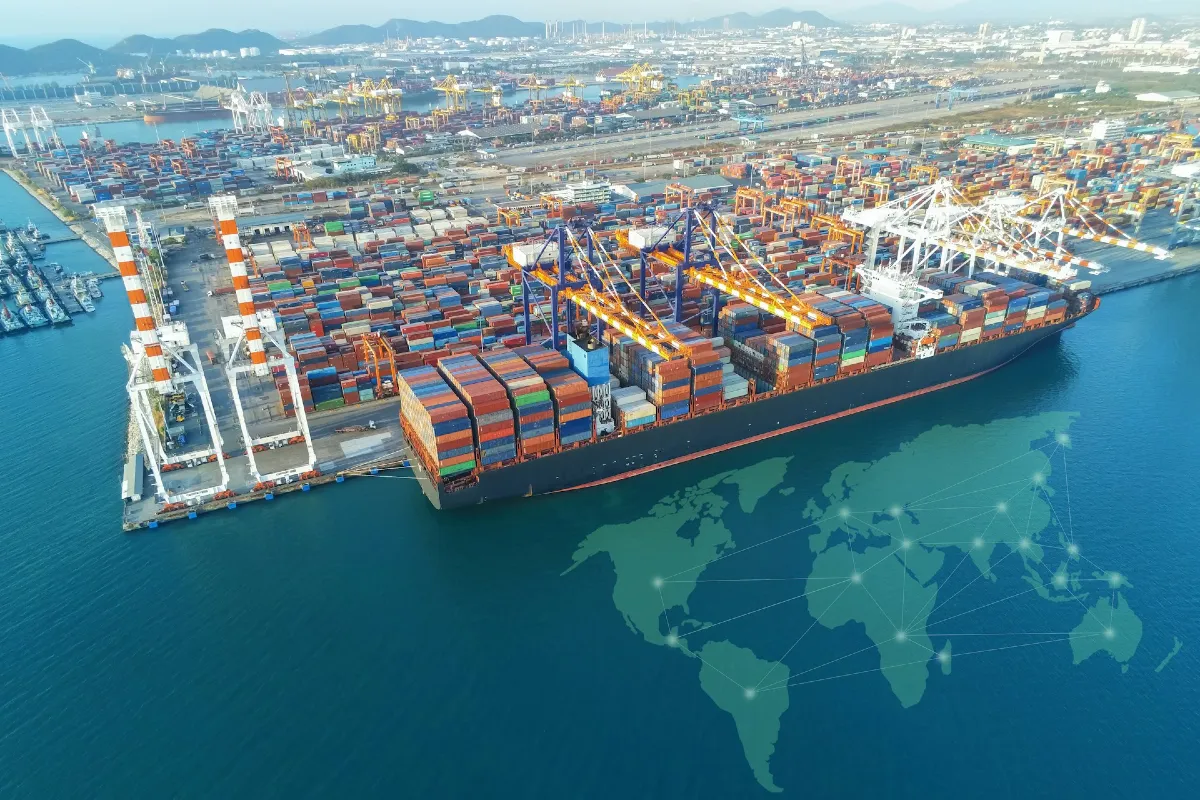
The Strait of Hormuz is arguably the world’s most vital shipping lane. It connects the Persian Gulf with the Indian Ocean, and roughly 20% of the world’s oil flows through it daily (as well as gas and petrochemicals). At its narrowest point, it is only around 20 miles wide, and it is flanked by Iran to the north.
If the conflict were to result in a major escalation such that energy exports and/or shipping through the Strait were closed off, oil prices could feasibly surge above $100/bbl, as noted above. The countries that would be affected hold around 95% of OPEC+’s 5.5 MMbd of spare capacity, according to Capital Economics; as such, OPEC+ may be severely limited in its ability to employ spare capacity to offset upward pressure on oil prices.
How do these developments impact Cohen & Steers portfolio positioning?
Not surprisingly, the most direct impacts are on our portfolios with direct exposure to commodity futures and/or energy-related equities. These include our real assets, natural resource equities and energy strategies as well as, to a lesser extent, our global listed infrastructure strategies. Significantly, crude oil futures and energy stocks had already gained prior to the weekend’s strikes, up more than 20% and 10%, respectively, for the month.
Against a backdrop of global and US equities delivering only ~1% gains through Friday 20 June, we believe this degree of outperformance points strongly to the market moving in advance to price a geopolitical risk premium into the energy markets. We believe further outsized higher prices from here would likely require an escalation of the conflict that begins to have a concrete impact on Middle East supply. This is not our base case.
While we can’t comment on impending trades and specific holdings, we were positioned as follows in energy as of 20 June, heading into the weekend developments:
- Diversified real assets: We had a top-down underweight to commodities and an overweight to natural resource equities. In our multi-strategy
- real assets strategies, within our natural resources exposure, we were underweight energy. We were generally underweight the front of the curve in commodity futures.
- Natural resource equities: We were neutral energy, with a slight bias for natural gas-exposed names vs. oil.
- Future of Energy: While we have had a preference for traditional energy over alternative energy, a benchmark rebalance occurred the week of 16 June, which adjusted our relative positioning closer to neutral (defined as 70% traditional and 30% alternative).
- Global listed infrastructure vs FTSE 50/50: We were neutral North American midstream, with an overweight to Canada and natural gas exposed names; we were underweight the US and oil-exposed securities.
What impact could this have on US and global economies?
From an economic perspective, looking ahead, the main risk is a “stagflationary” impulse stemming from Middle East supply disruptions leading to a prolonged period of high and rising energy prices. In the event of a sustained closure of the Strait of Hormuz the drag on global growth and the boost to inflation could be material.
Under such conditions, it would not be surprising to see broader market weakness that could impact most risk assets. History suggests, however, that the market impact of geopolitical events tends to be short-lived.
Prolonged higher energy prices could also put further pressure on the Federal Reserve to resist cutting rates as it battles inflation.