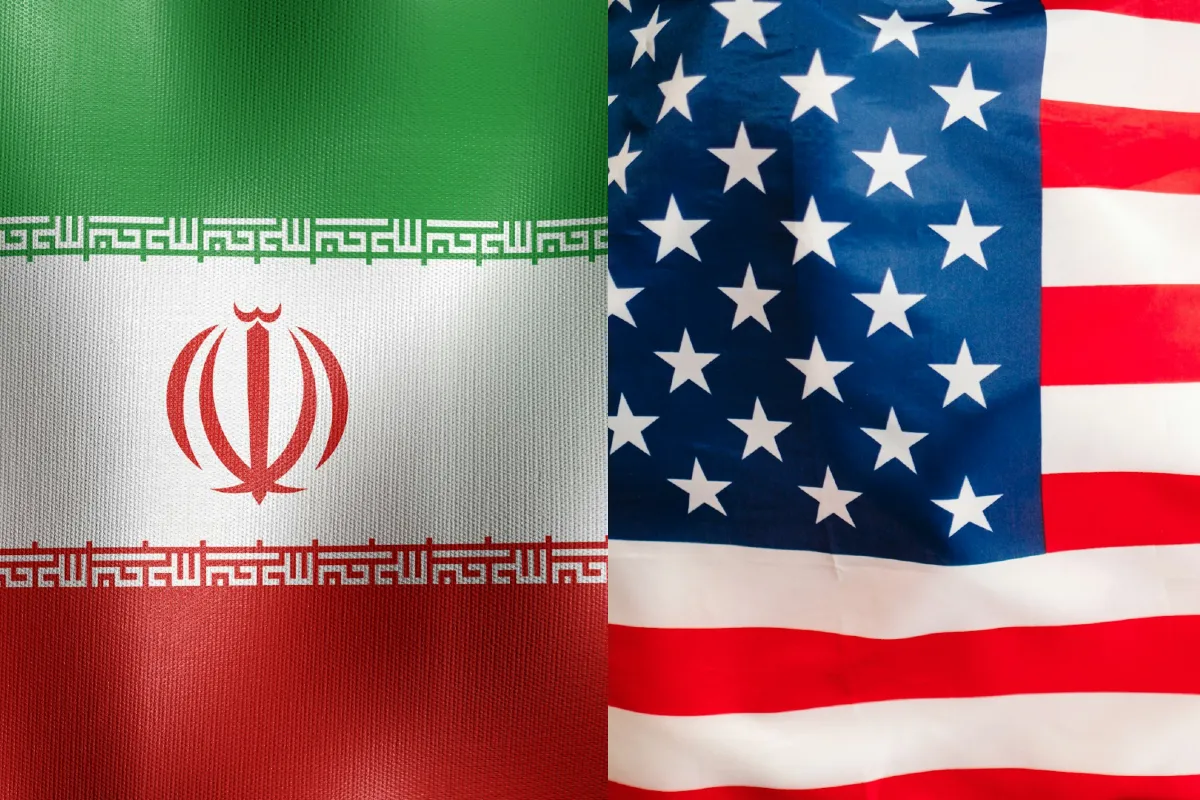
Wars are, by their nature, unpredictable. Unlike recent trade conflicts where damage is easily reversible, hot wars, as we have seen with Iran, cannot simply be managed or resolved solely by Washington. The US, Israel, Iran, Gulf states, and external powers all have distinct – and in some cases competing – objectives as we will see in the weeks ahead.
The announcement of a two-week ceasefire should be understood in this context. It represents a pause in escalation rather than a resolution. While it reduces the immediate risk of direct confrontation, ongoing tensions – particularly in Lebanon – highlight how fragile this pause may prove to be.
Investors need therefore to remain clear-headed but flexible, focusing less on the noise of daily developments and more on the structural forces that will shape markets in the months ahead. In many ways, this reinforces Sarasin’s wider Fragmentation regime with this war having long-lasting impacts for trade, security, energy and the US dollar as the global currency.
A muddle-through scenario
From a military perspective, the latest ceasefire in the Iran war aligns with what we have previously described as a “muddle-through” scenario. It lowers the probability of near-term escalation and allows all parties to regroup, while giving policymakers – particularly in Washington – space to claim tactical progress ahead of key diplomatic engagements, including President Trump’s planned visit to China in mid-May.
However, this falls well short of a durable settlement. Iran, though weakened, still retains control over access to the Strait of Hormuz, despite the ceasefire. Gulf neighbours will also continue to face a wounded regime capable of periodic retaliation against energy infrastructure and shipping routes.
Crucially, several other uncertainties remain unresolved. These include the whereabouts of Iran’s nuclear material, the potential escalation to US ground involvement, and the willingness – or otherwise – of external powers to participate in securing maritime flows.
Rather than marking the end of the crisis, the ceasefire is more likely to signal a transition – from an acute phase of conflict to a less intense, but arguably more persistent, period of instability. For markets, this suggests that while volatility may ease in the short term, a structural risk premium is likely to remain.
A long-term risk premium for oil
Against this backdrop, the most immediate impact has still been a near 50% rise in crude oil prices this year (even after a 15% fall in the aftermath of the ceasefire). The magnitude of these moves reflects the scale of the disruption: an effective blockade that removed an estimated 15–20% of global supply. This has been materially larger than any oil shock of the past 60 years, with the closest historical parallel being the Iranian Revolution of 1978–79.
While a ceasefire should, in time, allow supply to return permanently, Iran’s continued control over the Strait implies that an ongoing risk premium will remain embedded in prices. A sustained decline in oil would likely require either a permanent Iranian climbdown or the establishment of a credible international naval force capable of guaranteeing free passage. The latter, in particular, represents a far more complex logistical and military challenge than initially assumed.
The disruption has also spread beyond crude markets. Refined products –particularly diesel and jet fuel – have been severely affected, with supply chains under strain. These markets tend to adjust more slowly, suggesting that shortages, especially in Asia, may persist despite even after the two-week ceasefire.
Central banks will likely pause… for now
Central banks are now in a somewhat more comfortable position following the ceasefire. While the energy shock has been significant, the pause in hostilities reduces the immediate risk of further supply disruption and extreme price volatility.
This should give policymakers greater confidence to “look through” the energy-driven inflation spike and pause policy. Rather than responding aggressively, they can afford to keep interest rates steady or adjust policy more gradually. In effect, this approach spreads the economic impact more evenly – allowing inflation to rise temporarily, rather than concentrating the adjustment through weaker growth or recession. As Federal Reserve Chair Jerome Powell has noted, longer-term inflation expectations remain “well anchored”, giving central banks the flexibility to avoid over-tightening into what may prove to be a transitory shock.
For investors, this reinforces the case for a more balanced view on government bonds. Yields remain elevated, but the risk of aggressive policy tightening has diminished in the wake of the ceasefire. We have therefore moved our positioning from underweight to neutral.
So, where are the safe havens?
Against this backdrop of the war, traditional safe havens have behaved less predictably. The US dollar, for example, has strengthened only very modestly – this is unusual in a period of geopolitical stress.
Part of the explanation lies in the origin of the risk itself. With much of the uncertainty emanating from US policy, international investors have become more cautious about increasing exposure to dollar assets, despite America’s relative insulation as a major energy producer.
Iran’s control of the Strait of Hormuz, despite the ceasefire, still challenges the US security and Petrodollar network. There have been suggestions that oil exports from the Gulf are currently being paid for in Yuan or cryptocurrencies rather than in dollars. Rival countries like China and Russia have already reduced dependence on the dollar. Concerns that dollar assets could be used as a tool of financial coercion in future crises have reinforced this thinking. Combined with persistent US fiscal deficits, this continues to argue for gradual diversification away from the dollar over time. We therefore maintain an underweight position.
What role has gold played?
Gold has not provided the refuge that might have been expected – prices have fallen by around 10% since the war began. This may simply reflect short-term profit taking or shifting into energy assets, with prices still up by more than 50% over the past year.
We have reduced positions over the past month but continue to see a long-term role for gold within our portfolios. It remains attractive to central banks seeking diversification from the dollar and still serves as a long-term hedge against widening fiscal deficits, globally. The Iran war once again highlights the fragility of energy and defence supply chains and security guarantees, which will further strain government resources.
How does this impact our outlook for equities?
Global equities have fallen from their peak in early March 2026 by around 5%, while global earnings expectations have, counterintuitively, risen since the start of the war. We have used this opportunity, and the announcement of the ceasefire, to start drawing on our precautionary cash reserves by adding progressively to equity exposure.
Four key issues support this:
- Global growth was relatively robust entering the crisis, particularly in the US. This is supporting corporate earnings globally.
- Economies are far less energy-intensive than in the 1970s, with energy consumption per unit of GDP having fallen significantly.
- Fiscal policy remains highly supportive, especially in the US and China, where deficits are expected to remain elevated.
- The ongoing surge in AI-related investment is providing a powerful offset. Capital expenditure by the ‘hyperscalers’ (Amazon, Microsoft, Alphabet, Meta and Oracle) alone could reach $600–700bn in 2026, supporting demand across a wide range of sectors.
Conclusion
Today’s energy crisis is not like earlier oil shocks. While the disruption is severe, it is being absorbed by a global economy that is more resilient, less energy-intensive and underpinned by fiscal expansion and AI led investment. With the announcement of the two-week ceasefire the situation seems to be evolving into a more managed – though far from resolved-phase.
As we look ahead, the more durable signals for investors lie in long-term structural forces of which the conflict is part. Tangible assets are likely to be the winners, particularly energy (including renewables), infrastructure, defence and commodities. This supports our gradual addition to equity risk, our use of government bonds primarily for income, and our position in gold. Finally, prepare for the continued build-out of the AI economy, which will have an impact across every global industry, regardless of the direction of the war.