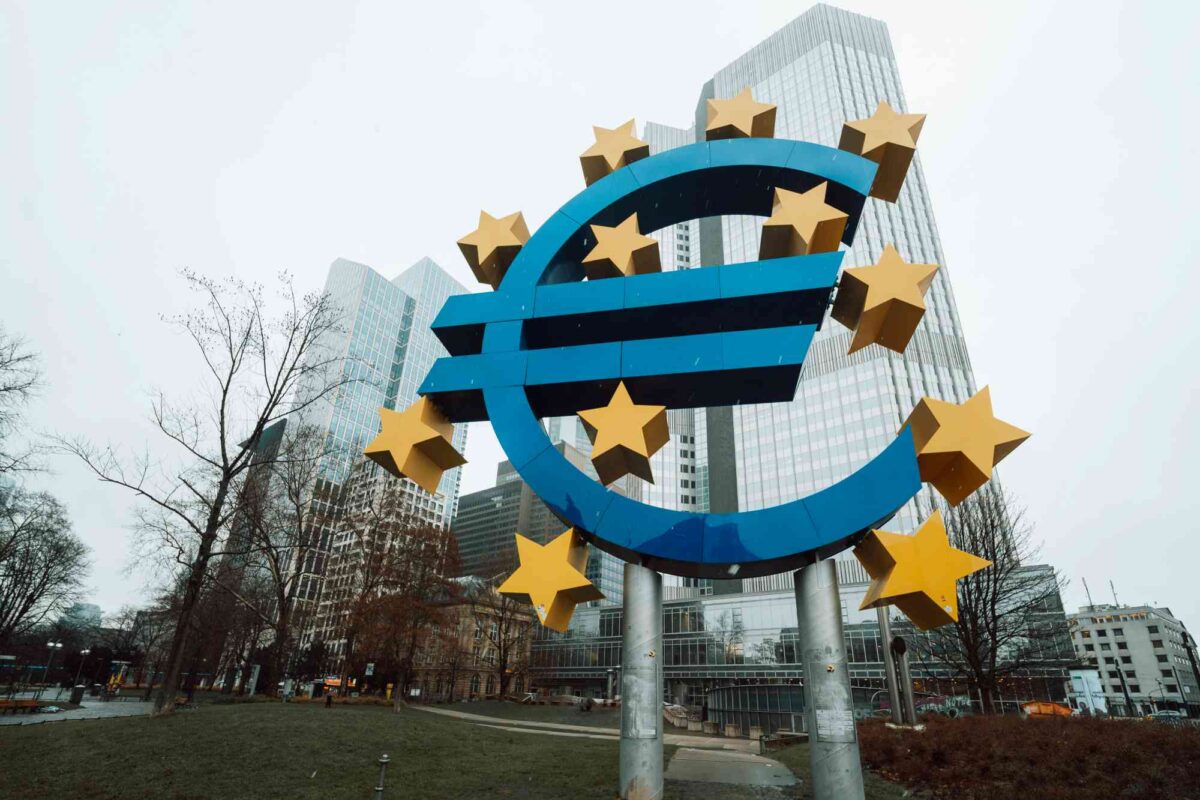
The European Central Bank (ECB) has opted to keep interest rates on hold today, striking a cautious tone as policymakers grapple with uncertainty and a rapidly shifting economic and geopolitical backdrop. ECB is the latest central bank, joining the Bank of England, Fed and Bank of Japan in their decisions this week to keep interest rates on hold.
With inflationary pressures beginning to re-emerge, largely driven by higher energy costs linked to the conflict in the Middle East, while growth across the eurozone shows signs of softening, all the major central banks face an increasingly delicate balancing act and the ECB is no exception. Markets had widely anticipated today’s decision, but the focus now turns to what comes next, as uncertainty over inflation, consumer demand, and global developments leaves the ECB – like the BoE and the Fed – firmly in ‘wait-and-see’ mode.
Sharing their reaction to news of the ECB holding interest rates at 2%, industry experts have commented:
Richard Carter, head of fixed interest research at Quilter Cheviot said:
“As with the Bank of England earlier today, the European Central Bank has a very limited ability to impact inflation and thus for now interest rates remain on hold. The central bank has said it will take a meeting-by-meeting approach, and quite frankly it has no choice but to do so given how fluid the situation in the Middle East is and the potential for things to change dramatically over the course of even a day.
“That said, the ECB has said it remains prepared to do what is necessary to keep inflation in check. Europe, however, continues to suffer from low economic growth and this risks being exacerbated by the inflationary pressures that are becoming apparent.
“However, the ECB is starting at a very different place to most other central banks, with interest rates starting at a much lower point. Therefore, it has some room to raise rates should the inflation we are beginning to see become more ingrained in general prices, while not hurting growth too significantly.
“But equally, so much of the path for interest rates is effectively decided by what the US and Iran do next. No resolution appears to be coming and as such the blockade or ports and the closure of the Strait of Hormuz is likely to be prolonged, keeping energy prices higher for longer. In this scenario, the ECB may find itself backed into a corner with no choice but to raise rates, despite the desperate need for economic growth across the continent.”
Commenting on today’s interest rate decision from the European Central Bank (ECB), Irene Lauro, Senior Economist – Europe and Climate at Schroders, said:
“Inflationary pressures are starting to resurface in Europe with fresh supply‑chain disruptions pushing up costs. At the same time, the eurozone’s services sector is beginning to lose momentum. A sharp fall in consumer confidence suggests households will remain cautious, limiting spending and weighing further on services demand.
“Tourism also faces headwinds, with shortages of jet fuel likely to drag related sectors down over the summer. These developments leave the ECB with limited room to raise rates further this year.
“Against this backdrop, market pricing looks too aggressive, with investors expecting two ECB rate hikes this year. As growth risks intensify, this looks increasingly unlikely. The ECB will monitor upcoming wage data closely for signs of second‑round effects, but softer services activity should ease labour market tightness and limit sustained wage pressures.”
Ed Hutchings, Head of Rates, Aviva Investors said:
“Today’s ECB’s decision to hold rates at 2.00% was fully expected, but looking ahead to the next meeting in June, its clear uncertainty remains for the Governing Council with the balancing act of higher inflation against weaker growth. Inflation expectations from the Iranian conflict are already on the rise and if sustained, a hike of 0.25% and perhaps more, will almost certainly be on the cards.
“The outlook for growth should limit the extent of any hikes but nonetheless, I would expect the ECB to certainly be on the front foot to address any unwanted inflationary fallout. Value is certainly being created in European Bonds but overweight positions still warrant some caution, at least in the near-term. However, in time this will change.
“Overall, the immediate priority for the ECB is clear: hold for now but addressing the inflationary backdrop is key, and as such as it stands the market is right to still believe hikes could well be coming down the line.”
Michael Field, chief equity strategist at Morningstar, has provided the following insight on what this means for the European market saying:
“Like the Bank of England and the Federal Reserve, the European Central Bank today elected to keep the deposit rate on hold at 2%. Given the current uncertainty in markets, this decision makes perfect sense. Interest rate setting had become relatively stable until just a few months ago. Now, with the price of a barrel of oil spiking to $125, everything has shifted. Central bankers are of course concerned about the impact on inflation if the Middle East conflict becomes any more prolonged.
“Equity markets had originally expected flat rates in 2026, or even the possibility of rate cuts at some point. Right now, they are pricing in 2-3 rate cuts, bringing rates as high as 2.5-2.75%. Markets will likely read the language in today’s statement positively. Words like “monitor the situation” imply there is no collective need to panic.“
Mitch Reznick, Head of London Fixed Income at Federated Hermes said:
“As was widely guided and expected, the ECB’s Governing Council elected for prudence in keeping the Deposit Facility Rate at 2% despite some early signs of rising prices. Whilst there is no change to its recent trend of ‘no change’, there is a shift in the Council’s language. The Council is clearly giving itself the flexibility to take action at the next meeting in June, for which the market has fully priced in hikes to the ECB’s key interest rates. That being said, and as acknowledged by the Governing Council in its press release, the path forward may be complicated by the countervailing combination of “upside risks” to inflation and the “downside risks” to economic activity, both due to the effects of the oil supply shock.”
Daniele Antonucci, Chief Investment Officer at Quintet Private Bank (parent of Brown Shipley) comments: “The ECB decision reflects an inflation outlook that, on the surface, has not changed. But the risk profile now looks very different: upside risks to inflation have increased; downside risks to growth have intensified. Policy remains anchored to the 2% inflation target over the medium term. That anchor matters more as uncertainty rises. The Middle East war has pushed energy prices sharply higher. That lifts inflation directly and weakens confidence. What matters now is duration. A short shock is manageable. A prolonged one risks broader, stickier inflation and weaker activity.
“Higher energy prices feed beyond fuel bills. The longer they persist, the greater the risk of second-round effects. The euro area entered this shock from a position of relative strength. Inflation was close to target. Growth, while soft, had been resilient. Long-term inflation expectations remain stable. Short-term expectations have moved higher and warrant close attention.
The ECB is signalling flexibility. Decisions will remain data‑driven and meeting by meeting. There is no pre-set rate path. Rates can stay where they are, move higher, or stay restrictive for longer if inflation risks materialise. For growth, the outlook remains below trend. High savings and low unemployment offer some cushion. Europe’s exposure to Middle Eastern energy adds a clear drag to near-term momentum.
Markets face a familiar mix of higher geopolitical risk and renewed inflation uncertainty. In that environment, assets that hedge inflation and instability retain their role.
“Gold, broad commodities and inflation-linked bonds provide protection when energy shocks persist. Equities still look preferable to bonds. They are tied to real assets. Fixed income remains vulnerable to inflation surprises and rate risks. Within equities, Europe looks balanced rather than attractive. The geopolitical backdrop argues for caution. In fixed income, quality matters more as uncertainty rises. Government bonds again offer value at current yields. Lower-quality credit is more exposed to slower growth and tighter financial conditions. Emerging market local currency bonds remain selective opportunities. Yields are high, diversification benefits are real, and some exposure sits with oil exporters outside the conflict zone.”
Lauren Hyslop, Investment Manager at Mattioli Woods, said: “The European Central Bank held rates at 2% today, as widely expected. With inflation edging higher and growth remaining subdued, the case for staying put was straightforward. Markets had it right.
“What is less straightforward is what comes next. A hike at the following meeting is now being priced with some conviction – a notable shift in tone from just a few months ago. The driver is not domestic: it is the Middle East.
“The US-Iran conflict is increasingly hard for European policymakers to look past. Energy costs are rising, supply chains are under strain, and while Europe has so far avoided the fuel rationing spreading across parts of Asia, that buffer may not hold indefinitely. European leaders are growing openly frustrated with Washington over the absence of a credible off-ramp, and the pressure on household finances is beginning to show.
“For the ECB, this creates an uncomfortable bind. Rate rises are a blunt tool against an energy shock that is being imported rather than generated at home. What’s more that same energy shock threatens growth and jobs- a situation likely to be even trickier with higher rates. But with inflation still above target and geopolitical risks skewed to the upside, standing still for too long carries its own risks. Like other central bankers Christine Lagarde has a fine line to walk when trying to avoid getting too far behind the curve.”
Commenting on today’s ECB decision, Max Stainton, senior global macro strategist at Fidelity International, said:
“The European Central Bank (ECB) held rates as expected, emphasising that downside risks to growth and upside risks to inflation have intensified since the last meeting, while highlighting that they will set monetary policy to ensure that inflation stabilises at 2% in the medium-term.
“The ECB took a balanced tone as they monitor the uncertain fallout of the energy price shock, with both a hike and hold debated – but ultimately a wait and see approach was seen as justified. The decision to hold was made against the backdrop of only marginally more information relative to March with the news flow over the next six weeks providing more clarity on how the shock is playing out.
“We see the ECB hiking in the near term, to lean against the inflationary impulse of higher energy prices and supply chain disruptions in order to contain potential second round effects and ensure that the ECB clearly commit to reining in inflation.
“June will provide a further round of projections and scenarios, leaving them in a better position to act. Inflation expectations and forward-looking wage developments will be closely monitored going forward – with the inflation outlook for this year already likely pointing to a higher path relative to the March forecasts.”
Felix Feather, Economist, at Aberdeen said;
“Just a month ago, markets were pricing in an 80% chance of the European Central Bank (ECB) delivering a hike at today’s meeting. That chimed with the very hawkish communications key ECB officials were delivering at the time, which often drew parallels between the 2022 energy shock and today’s. But in the end, the decision to hold the deposit rate at 2% came as no surprise to either our forecasts, consensus, or market pricing, which priced an 8% change of a hike.
Certainly, the energy shock hasn’t unwound as hoped. At time of writing, brent crude prices sit above $116/bbl.
And many of the waymarks to hiking laid out by ECB Chief Economist Phillip Lane have been hit. Surveyed household inflation expectations, firm selling price expectations, the PMI output prices subindex, and headline inflation have all moved sharply higher over the past month.
But weak activity data has prompted key ECB officials to soften their rhetoric for fears of impairing the demand side. We see the ECB eventually hiking this year, probably multiple times. But soft demand and tighter financial conditions could help attenuate the passthrough of higher costs to consumer prices.”