By Dean Cheeseman, Managing Director of Client Investment Solutions at Mattioli Woods
Roger Federer won 20 Grand Slam titles, spent 310 weeks as world number one, and is widely regarded as the greatest men’s tennis player who ever lived. He also won just 54% of the points he played across his career: that figure is worth sitting with for a moment.
A little over half, and yet Federer won nearly 80% of his matches. His career was not built on perfection, but rather consistency, resilience and the extraordinary power of small advantages being accumulated over a very long time. For anyone thinking about long-term investing, that distinction matters enormously.
The myth of the perfect decision
Many investors approach markets the way a nervous first-timer approaches centre court: searching for the perfect moment to act, convinced that success depends on getting every call right. In reality, good investment practice looks nothing like that. It looks much more like Federer’s career – a long sequence of less than perfect moments, managed well enough to produce extraordinary results.
Markets, like tennis matches, are rarely linear. There are setbacks, corrections, and periods where nothing seems to be working. The temptation when volatility strikes is to step back, wait for calmer conditions, and re-enter when the picture looks clearer. It’s an instinct that feels prudent. The data tells a different story.
Missing just a small number of the market’s best-performing days – days that frequently cluster in the immediate aftermath of sharp downturns – can significantly erode long-term returns. The investors who stayed invested through the difficult moments are often the ones who captured the recovery. The ones who waited for certainty frequently missed it.
Federer’s career is one of the most compelling illustrations of why time in the market matters more than timing the market. While he didn’t win every point or dominate every season, what he did do was stay competitive, adapt, and keep showing up. Over time, those small consistent edges compounded into something remarkable. That’s precisely how wealth is built.
Resilience, not perfection
What makes Federer’s story particularly instructive is that his losses were not simply obstacles to be overcome; they were part of what made him great. Defeat only forced adaptation, and as his career progressed, he refined his game, managed his schedule more carefully and became increasingly selective about where he directed his energy. Setbacks did not end his relevance, they extended it.
Investors would do well to apply the same logic. A robust investment strategy should not depend on never being wrong. It should be resilient enough to absorb disappointment and remain effective. Drawdowns and corrections, however uncomfortable, test whether an approach is truly durable. A plan that only works in favourable conditions is not really a plan at all.
The long game
Federer retired in 2022 after 24 years at the top of his sport. His legacy isn’t a highlight reel of winning moments, it’s the full arc, losses included, of a career defined by discipline, adaptability, and an unrelenting willingness to remain in the match.
For investors, the lesson is the same. The goal is not to win every point, but rather to stay engaged long enough for compounding to turn consistency into something extraordinary.
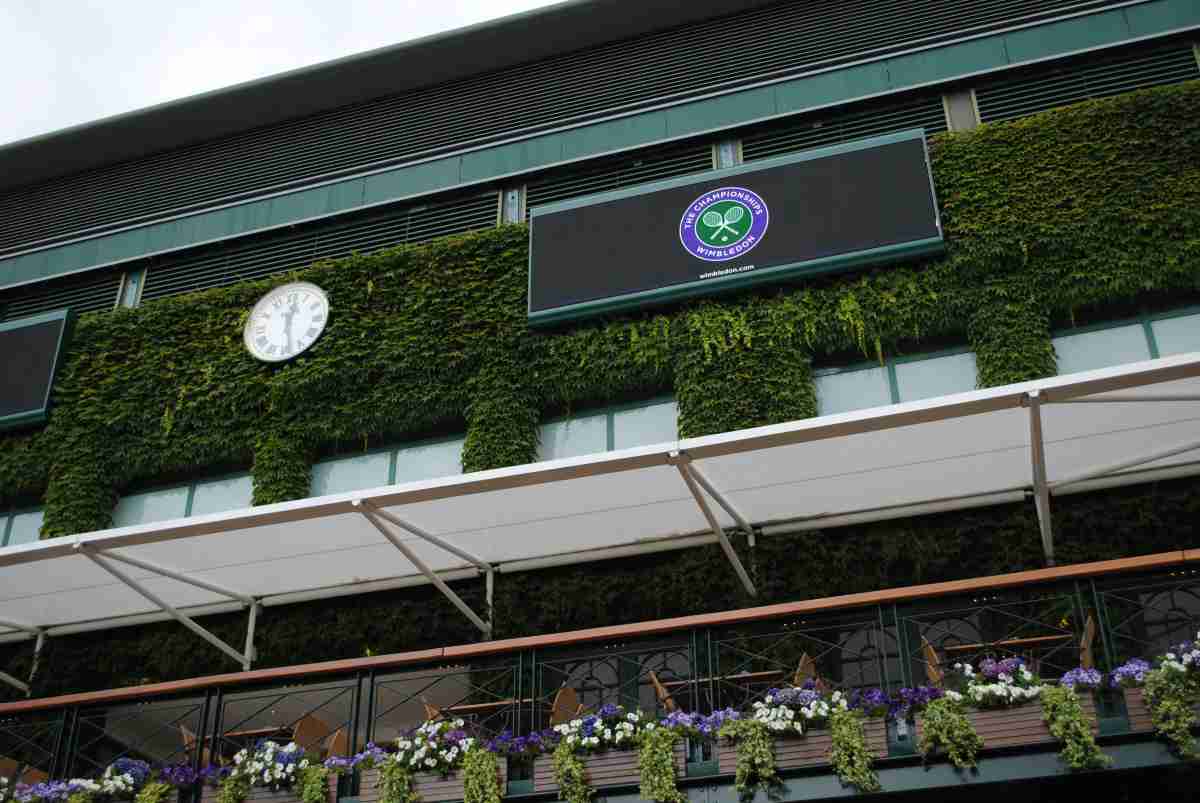
With Wimbledon well underway once more, sadly without the spectacle of Roger Federer as part of the draw, that feels like a principle worth remembering.