Laura Suter, Director of Personal Finance at AJ Bell, comments on the latest income tax liability statistics.
The nation is paying more tax, and that trend isn’t ending any time soon. The latest figures show a huge increase in the number of people paying income tax, as frozen allowances and high wage growth combine forces to squeeze the incomes of the working population.
Frozen tax thresholds are affecting almost everyone who pays income tax, from pensioners to anyone earning more than the £12,570 personal allowance. But the biggest impact is felt by those pushed into a higher tax band. Once your income exceeds £50,270, every additional pound you earn is taxed at 40%, rather than the 20% basic rate. That means a much larger slice of any pay rise goes to the taxman, leaving you with far less extra money in your monthly payslip.
There is expected to be 7.7 million higher rate taxpayers this year, an increase of more than 1 million in the past two years alone. The impact of the higher rate tax band being frozen at £50,270 since 2022 means that the number of higher rate taxpayers will rise by 74% in the current tax year, compared to the 2021/22 tax year.
The rise in additional rate taxpayers has been on an even steeper trajectory. Not only was this band frozen at £150,000, but it was then cut to £125,140 in 2023/24, dragging more people into the top tax rate. This year it’s expected that 1.3 million people will pay tax at 45%, far more than double the number in 2021/22.
Previously, this tax rate was the preserve of the super rich, with just 236,000 people paying it in 2010/11 when it was first introduced. But rising wages and the lowered allowance means that it’s become more commonplace – now accounting for 3.2% of all taxpayers.
The only area where we’ve seen a consistent fall in the number of taxpayers is with those paying the savers rate of tax – where they have no taxable earnings but had taxable savings or dividends. This group of taxpayers has shrunk consistently over the years – due to more being pushed into becoming taxpayers. Rising state pension income plus frozen allowances also means more of these people will have been pushed into having taxable income.
The rise in number of basic-rate taxpayers has been more moderate. There’s been a 15% growth in the number of people paying income tax at 20% since tax bands were frozen at 2021 levels. While more people have been pushed into paying tax, far more people have been pushed out of the basic-rate band and into the 40% tax bracket.
There’s one winner from this rising tax tide: the government, as it rakes in more tax from the nation. This year alone it’s expected the nation will pay £347 billion in tax – a cool £121 billion more than the last time tax thresholds increased in 2021/22. Even in the past year alone, it’s expected that the government will take in an extra £18 billion in income tax.
This highlights the conundrum for the incoming prime minister, Andy Burnham. While the frozen tax bands are squeezing the nation’s pay packets until the pips squeak, they are a very lucrative source of income for the government – one it can ill afford to lose.
How the government’s total tax take has changed
| Tax year | Total Income Tax |
| 2026/27 | £347 billion |
| 2025/26 | £329 billion |
| 2024/25 | £304 billion |
| 2023/24 | £274 billion |
| 2022/23 | £245 billion |
| 2021/22 | £226 billion |
| Change since 2021/22 | £121 billion |
Pensioners paying more tax
By the end of this tax year, almost a quarter of all taxpayers are expected to be over the state pension age – as a number of factors have combined to mean that more pensioners are paying tax on their income. The general trend of an ageing population means there are more people over the state pension age, but also more people are working past this point, leading to more taxpayers.
On top of that, the frozen personal allowance coupled with the state pension rising significantly under the triple lock means more people are pushed to near their tax-free limit just from their state pension income alone.
This proportion of pensioner taxpayers has risen steadily over the years, standing at around 14% of all taxpayers back in 1999/2000 when the figures began, but it’s turbocharged in recent years thanks to frozen allowances.
Impact of the decade-long tax freeze
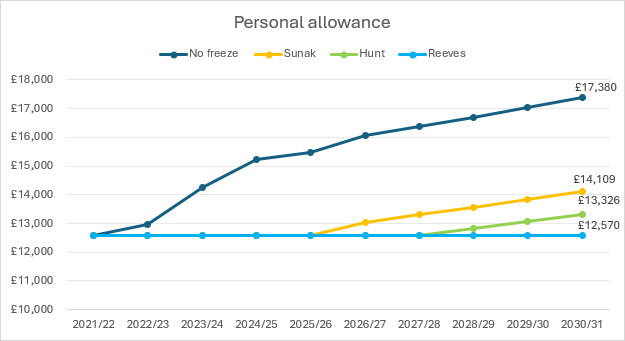
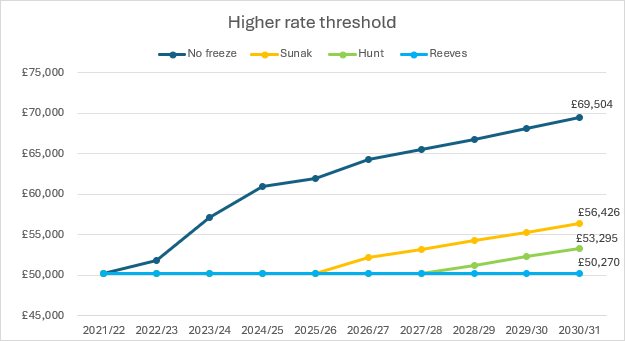
AJ Bell analysis illustrates the impact that frozen thresholds could have between now and 2031 when they are next due to increase.