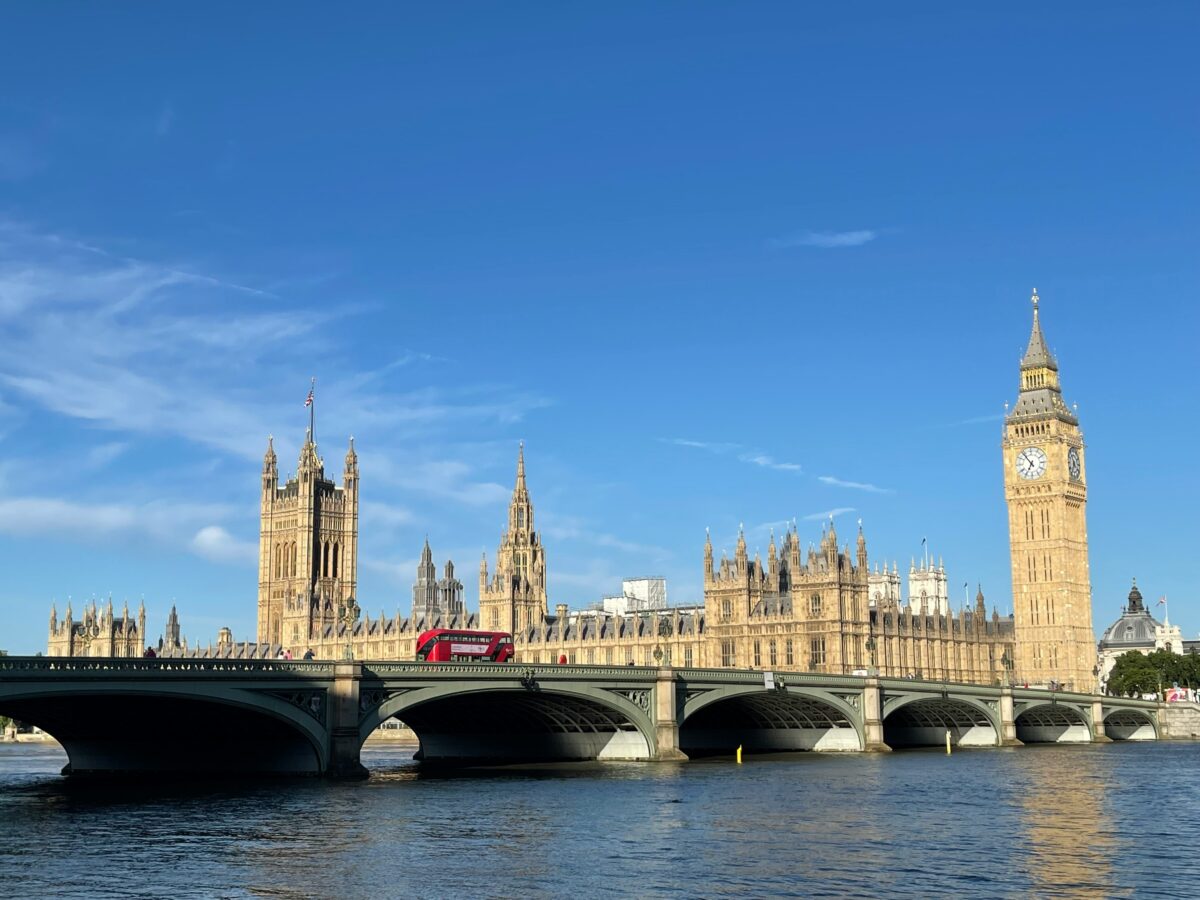
The Bank of England has cut the base rate by 0.25% to 3.75%, following softer inflation data and signs that wage pressures are easing. The move was widely expected, but it marks the first step below 4% in almost three years. The bigger story is what comes next. Recent data has strengthened the case for further cuts in 2026, with markets already pricing in more easing.
For wealth and asset managers, the focus now shifts to positioning for a gradually lower-rate environment and watching for opportunities as policy continues to loosen. Industry experts share their views on today’s decision below.
Jeremy Batstone-Carr, European Strategist, Raymond James Investment Services, said:
“Today’s decision by the Bank of England’s rate-setting Monetary Policy Committee to cut the base rate by a further 0.25%-points to 3.75% has come as little surprise.
“While the MPC’s job is to set the UK base rate with regards to the future the decision was taken with the clarity provided by confirmation of the contents of the Chancellor’s Budget package, a softening economy and lower than anticipated inflation data. All of which meant that earlier arguments against policy loosening were on increasingly thin ice.
“That the 5-4 decision was as close as it was points to the likelihood that for the more hawkish MPC members, insufficient proof exists that inflation expectations have been extinguished. For the majority, the economy’s subdued start to the final quarter of the year portends further weakness ahead of developments likely to manifest in a further loosening in the labour market, easing wage pressures and an extension of the disinflation already apparent over the autumn.
“Furthermore, the majority on the Committee will be well aware that by April, the inflationary measures contained within last year’s Budget will drop out of the year-on-year comparison, a development likely to result in a pronounced closing in the gap between UK price pressures and those elsewhere.
“In consequence, today’s rate cut is unlikely to be the last, and confirmed in the accompanying statement providing encouragement for businesses and further relief for households grappling with a relentless cost of living crisis.”
Ed Monk, Pensions and Investment Specialist at Fidelity International comments:
“A rate cut to end the year is an early holiday gift for borrowers – and there’s reason to hope that more cuts will arrive in 2026. The Bank today acknowledged that the risk of persistent inflation has reduced in recent months and decisions on further cuts are now more finely balanced.
“Inflation peaked below the Bank’s forecast earlier this year and is now falling more quickly than predicted – as confirmed by the fall in CPI to 3.2% this week. Meanwhile, steam is coming out of the labour market with employment lower, unemployment higher and more people claiming out-of-work benefits. All these act to remove inflationary pressure and support the case that further rate cuts are on the way in 2026.
“Markets are pricing in one further quarter-point cut in the first half of 2026 but the picture beyond that is less certain. However, the chances of a second cut next year are increasing.
“For investors, lower rates reduce the attraction of cash savings. Returns from savings accounts and cash funds remain ahead of inflation but we are clearly returning to a world of lower cash returns. Cash and money market funds accounted for four of the top ten best-selling funds for Fidelity Personal Investing clients in November, indicating that many are happy to sit on the sidelines and milk risk-free returns from now.”
Isaac Stell, Investment Manager at Wealth Club said:
“In the face of an economically bleak mid-winter, the Bank of England has cut interest rates by 0.25% today, delivering its fourth and final interest rate cut of 2025.
Yesterday’s better than expected inflation numbers gave the BoE sufficient cover to cut interest rates today, with the headline rate now sitting at 3.75%. However, the MPC was once again split, with four members voting against cutting rates despite a clearly declining labour market and weakening economy. For those voting against the cut, inflationary concerns continue to trump everything else.
With inflation having declined so steeply in November, traders have ramped up bets for additional rate cuts in 2026, the effect of which helped push the FTSE 100 closer to the elusive 10,000 mark, a poignant reminder that the stock market is not the economy.
Further rate cuts in 2026 should provide consumers with the confidence to splurge rather than save, which will help boost economic growth. The treasury and the government will certainly be looking on in hope of an economic Christmas miracle.”
Derrick Dunne, CEO of YOU Asset Management, has commented:
“Today’s decision marks a clear shift in the balance of economic risk.
“A cut to 3.75% is not a victory lap on inflation, but rather acknowledgement that restraint has largely done its job. CPI remains well above the Bank’s 2% target, yet it now appears less dominant as a threat than the steadily weakening outlook for growth.
“The picture consistently painted for the UK economy is one of mounting strain. Growth continues to contract, unemployment is rising, and the Autumn Budget tightened fiscal policy at a particularly fragile moment. Holding rates too high for too long would have carried increasing risk.
“This cut should help prevent a slowdown hardening into something more severe as we move into the new year. That said, 25 basis points will not transform the outlook overnight.
“For now, we remain optimistic that the direction of travel will continue along its path towards lower rates. Anyone uncertain about what this means for their personal finances should speak to a financial planner.”
Jonathon Marchant, Fund Manager at Mattioli Woods, said:
“As expected, the Monetary Policy Committee voted to cut interest rates by 0.25%, to 3.75%, today. With yesterday’s inflation data coming in much lower than expected and a succession of weaker data points in recent weeks, the cut was priced as a near certainty. What is more interesting is the voting breakdown. Last month’s vote of 5-4 in favour of holding interest rates was followed by another 5-4 vote in favour of cutting, this month.
“While any committee must be mindful of ‘group think’, the fact that any of the members voted to hold interest rates under the current circumstances is perplexing. Economic growth continues to be propped up by government spending and wage inflation is public sector driven.
Lower interest rates are key to driving forward economic growth and central to the achievement of many of the government’s stated aims. In the US, President Trump has derided the Chair of the Federal Reserve for his cautious stance on cutting interest rates, calling him ‘too late’ Powell. Unless we see interest rates fall further in the first half of 2026, Andrew Bailey may become a more suitable candidate for that moniker.”
Richard Carter, head of fixed interest research at Quilter Cheviot:
“Today’s long awaited US CPI print has come in cooler than had been expected. While headline and core inflation each rose by 0.2% in the two months from September to November 2025, the annual rates fell considerably. The headline rate for the 12 months to November fell to 2.7%, down from 3.0% in the 12 months to September, while core inflation dropped to 2.6% from 3.1%.
“With no October comparator, as well as the delay to November’s data collection due to the prolonged government shutdown, today’s figures will need to be taken with a pinch of salt. Regardless, the data out this week will paint the clearest picture of the economy we’ve had for several months and will be key to the Federal Reserve’s decision making in the coming months.
“Jobs data out earlier this week saw heavily subdued payrolls numbers and an uptick in unemployment to 4.6%, and GDP data due out next Tuesday will show how the economy is faring. While current expectations are for just one or two rate cuts in 2026 given the majority of FOMC members appear comfortable that interest rates are close to a ‘neutral’ level, should data projections change then they may be forced to reassess.
“As we move into 2026, all eyes will be on the dynamics of the FOMC – particularly with Trump piling on the pressure for more cuts. With the president determined to appoint a chair who follows his lead on pushing for lower interest rates, markets will be on high alert for any erosion of Fed independence.”
Michael Browne, Global Investment Strategist at Franklin Templeton Institute, comments:
“The MPC finally has the data it wanted—unlike the Fed, hamstrung by the government shutdown. But the news is tough. Unemployment hit its highest level since 2021, with 12 of 20 sectors shedding jobs. Government hiring accounted for half of all new employment.
“The wage picture reveals the real story: private sector wages are rising just 3.7% year-on-year (barely above inflation), while public sector wages surge at 8.1%. Since March, private sector growth has decelerated from 5.6% to 3.7%, while public sector growth accelerated from 4.9% to 8.1%.
“PMI data showed a post-budget bounce in orders, but companies continue cutting jobs to rebuild margins. With the OBR forecasting just 0.6% growth in real household disposable income for 2026, demand looks very weak—hardly inflationary.
“So why isn’t inflation falling faster? The public sector is crowding out the private sector through jobs and higher wages, likely pushing the budget deficit above expectations and forcing the Chancellor to consider further tax rises.
“The MPC faces contradictory indicators driven by public-private sector tensions, explaining the 5-4 split vote and painfully slow rate cuts. We expect inflation to fall below 2% in the second half, justifying more than the two cuts currently priced. If the public sector also slows, why wouldn’t base rates fall to 2.5%? That’s when housebuilders could finally power the economy.”
John Wyn-Evans, Head of Market Analysis, Rathbones, said: “Recent poor GDP and employment data had already strengthened the hand of the MPC’s ‘doves’ ahead of today’s meeting, while this week’s lower-than-expected headline inflation rate raised the possibility of a softer stance from the ‘hawks’.
“In the event, the 0.25% cut was duly delivered, but with that 5-4 split again, as Governor Bailey sided, this time, with the doves. The accompanying commentary from the meeting minutes reflected that balance, although it continues to point to more cuts to come in 2026, with rates being ‘on a gradual downward path’. The MPC appears keen not be seen to be taking risks with inflation, especially when many staple household goods and items of food remain much more expensive than they were in the not too distant past.
“There was a reference to finding the ‘neutral rate’, the interest rate at which inflation is neither rising nor falling, but, as we often observe, this is a rate that can often only be located by going past it owing to the lags in data and the transmission of monetary policy into the economy. All things considered, though, and this being the sixth quarter-point rate cut of the current cycle, we are likely much closer to the end than the beginning of the cycle, barring some nasty economic accident.
“Encouragingly, two of the more hawkish voters, Catherine Mann and Megan Greene, did acknowledge that they had moved closer to seeing the case of cutting rates, but everything will remain data dependent. Balancing that, three of those who opted to cut said that they will want to keep an eye on employment trends and wage growth before casting their next votes.
“While the rate cut is undoubtedly good news for borrowers, it seems insufficient to boost the economy substantially. Confidence remains low and the recent Budget failed to introduce measures that could be considered friendly to growth while increasing taxes by £26bn. The domestic political outlook remains uncertain heading into 2026, with May’s local elections providing the next big test for the Prime Minister.
“Market reaction was relatively subdued, although a slight rise in the value of the pound reflected the fact that the overall tone of comments implied that the base rate will not be cut again any sooner than previously expected. By the same token, Gilt yields rose a few basis points to reflect the shallow path of cuts from here. A firmer pound tends to weigh on the FTSE 100 index owing to its high exposure to earnings from overseas, and the index is unchanged and slightly underperforming other markets today. Mid and small-cap indices are equally unmoved despite their higher domestic exposure as there is some disappointment that more cuts do not seem to be coming sooner.”
Jonathan Moyes, Head of Investment Research, Wealth Cub:
“The market was expecting core inflation to come in at 3.0% for November, in an early gift to markets, core inflation came in at 2.6%. This provides markets with much needed clarity after the government shutdown. The initial market reaction has been positive with both equities and bond markets rallying strongly.
All eyes will now turn back to the Federal Reserve. The message throughout 2025 has been one of caution. Clearly the Federal Reserve has been reticent of cutting too far too soon. There are a number of crosscurrents in play, there were question marks over the extent to which trade tariffs will feed through into the inflation numbers, and next year, whether the big, beautiful bill will cause a big, beautiful return of inflation next year. What’s clear from todays’ reading – US inflation is softer than many thought, and this paves the way for looser monetary policy in 2026. The Santa rally might be coming to town.”