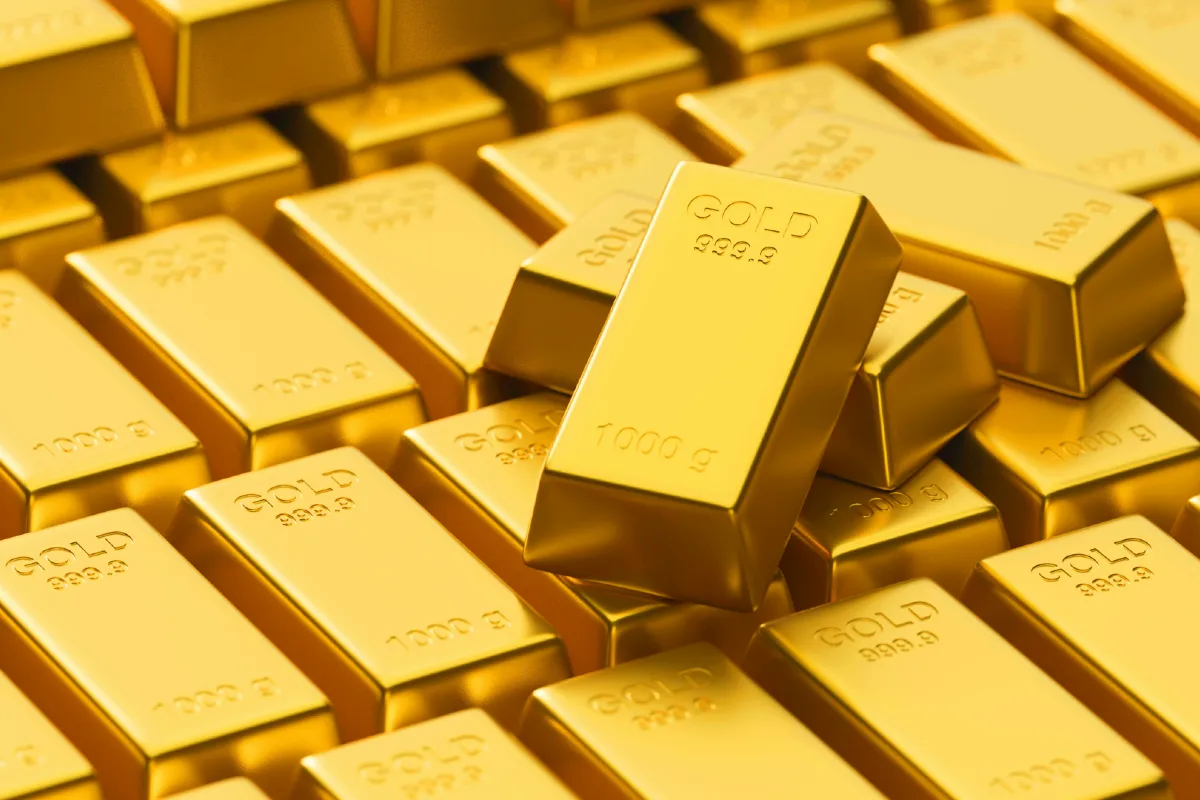
As the global commodities industry convenes in London for the annual London Metal Exchange (LME) Week, Aberdeen Investments is looking beyond the recent surge in gold prices.
Gold has been the standout performer in recent years, rising more than 130% over the past three years and recently breaking through the $4,000/oz threshold. While past performance is no guide to the future, its historical role as a store of value in times of inflation and geopolitical uncertainty remains undisputed.
However, Aberdeen Investments argues that the current investment landscape is far richer and more dynamic than gold alone suggests. A range of industrial and strategic minerals—such as copper, silver, platinum, uranium, and rare earth elements—are showing strong performance and even stronger long-term potential.
Iain Pyle, Senior Investment Director at Aberdeen Investments, said:
“Gold has led the way as a store of value, but we’re now seeing fundamental support for a broader range of metals. Silver, uranium, copper and platinum have all moved up markedly in recent months – to date at least.
“We still see good value in certain commodities. Copper is a prime example – it’s up around 20% this year, but supply is struggling to keep pace with demand. Existing mines are maturing, permitting is slow, and new projects face delays.
“We see a structural deficit forming. Silver and platinum have both outpaced gold year-to-date, yet their supply remains largely inelastic. Uranium is another standout—nuclear energy is seeing a renaissance, and demand is expected to outstrip supply by the end of the decade. These are real assets with real utility, and the investment case is compelling.”
Rally grounded in structural trends
Aberdeen’s analysis suggests that the current rally in these metals is not speculative but rather grounded in long-term structural trends. The energy transition, AI infrastructure build-out, and renewed focus on defence spending are all metal-intensive. These trends are expected to drive sustained demand for minerals such as copper, lithium, aluminium, and rare earth elements.
Silver, often seen as gold’s more volatile cousin, has quietly outperformed gold year-to-date. While gold demand is dominated by central banks and institutional investors, silver’s demand profile is more industrial. Over half of annual silver demand comes from industrial applications, particularly solar panels – a growing segment. Yet silver supply remains largely fixed, as it is typically produced as a by-product of mining other metals. According to Metals Focus, silver has been in a supply deficit for six consecutive years.

Platinum, too, is seeing renewed interest. Historically used in jewellery and catalytic converters for internal combustion engines (ICEs), platinum demand had been dampened by concerns over electric vehicle (EV) adoption. However, recent forecasts suggest slower EV uptake outside China and a stronger role for hybrid vehicles, which still require platinum group metals (PGMs).
Jewellery substitution is also emerging as a driver: platinum producer Valterra Platinum noted that if only 10% of white gold demand shifted to platinum, it could add 1.5 million ounces of annual demand – around 75% of current platinum jewellery demand. Platinum has rallied +78% YTD, climbing from $900–1,000/oz to over $1,600/oz, though it still trails gold’s significant rise.
Copper a cornerstone of long-term strategy
Copper remains a cornerstone of Aberdeen’s strategy. Despite its recent gains, copper is only just returning to its May 2024 peak. The supply outlook is constrained, with existing mines facing operational challenges and new projects delayed by permitting and cost overruns. Investment discipline among miners means new supply isn’t coming fast enough to meet rising demand. Aberdeen sees a structural deficit forming, which could support higher prices for years to come.
Uranium is another area of focus. With AI infrastructure driving up power demand and governments seeking stable, low-carbon energy sources, nuclear power is back in favour. The World Nuclear Association forecasts a tripling of nuclear capacity by 2050, with uranium demand expected to grow at over 4% CAGR through 2035. Supply growth, however, is lagging at around 2% CAGR, and major producers like Cameco and Kazatomprom are flagging declining output from existing assets. Aberdeen believes the market could move into deficit sooner than expected.
Rare earth elements (REEs), while niche, are increasingly critical. Their magnetic properties make them indispensable for EVs, wind turbines, smartphones, and defence systems. China currently dominates global supply, prompting the US to invest heavily in domestic production. For example, companies such as MP Materials have received backing from the Department of Defense and Department of Energy, with share prices up +275% YTD.
Iain Pyle added:
“Our approach focuses on equities rather than physical commodities, offering greater upside potential and benefiting from government incentives around near-shoring and supply security. Equities also allow investors to target companies with high-quality resources and operational discipline – key factors in a sector where supply constraints are increasingly shaping the investment narrative.
“Gold has its place, but it’s not the whole story. The mega-trends driving investment today – AI, clean energy, defence – are metal-intensive. The companies producing these minerals are well-positioned to benefit, and we believe the cycle is just beginning.”