Greenland tensions triggered renewed equity fund outflows – £697m in January, with the escalation in late January marking a clear turning point in monthly flows.
European and UK equity funds bore the brunt of selling, with other regions largely unaffected. Geopolitical risk is exerting a heightened influence on fragile investor sentiment, while fixed income and mixed assets remained steady amid equity weakness.
Greenland tensions triggered renewed equity fund outflows
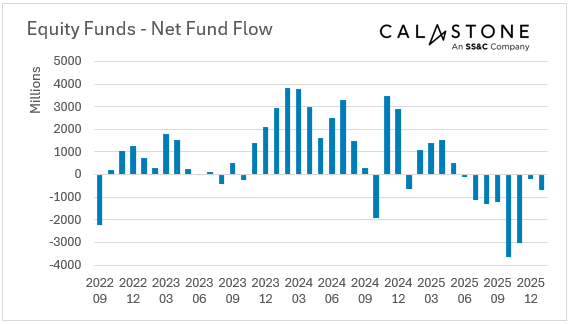
Greenland tensions drove a flight from equity funds in January, marking a weak start to 2026, according to the latest Fund Flow Index from Calastone, the largest global funds network. Outflows totalled a net £697m during the month, after a calmer December. January extended the bout of net selling to an unprecedented eighth consecutive month.
Late-January Greenland escalation marked a clear turning point in monthly flows
Two pieces of evidence link the outflows to developments in Greenland.
The first relates to the timing of flows. After a quiet first half to the month which saw outflows and inflows roughly in balance, the prospect of US tariffs on the UK and European nations for sending military planners to the island caused stock markets globally to falter. Outflows from equity funds accelerated sharply on January 19th and continued for the rest of the month.
European and UK equity funds bore the brunt of selling
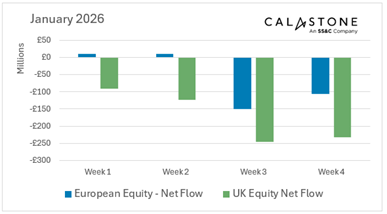
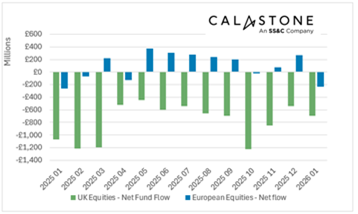
The second piece of evidence concerns the fund sectors that bore the brunt of the selling – namely European and UK-focused equities funds. European equity funds suffered their worst month since January 2025, as investors pulled £237m from the sector. Meanwhile UK-focused funds had been on track for the smallest outflows since May 2025, but after sell orders ramped up from 19th January the month ended down £694m.
Other regions largely insulated from Greenland concerns
Other fund sectors did not show the same pattern. Outflows from Asia-focused funds continued, but remained in line with the monthly average – in an unbroken almost three-year stint of monthly selling – and there was no change as the month progressed; outflows from Japanese equity funds were lower in January than in recent months and were smaller in the second half of the month. Meanwhile, emerging markets, global and North American funds all absorbed new cash.
Edward Glyn, head of global markets at Calastone said: “The pace of outflows in January was far slower than in the run up to the Budget, where a record flood of selling was prompted by concerns of possible higher pension and investor taxes. This indicates that the risk of conflict over Greenland was more of a tail risk in investors’ minds rather than a clear and present danger. It shows, however, that it doesn’t take much to fracture fragile sentiment, especially when stock prices are riding this high. Investors now have to be more alive to geopolitical factors than in the past and they are titrating their geographical allocations accordingly.”
Fixed income and mixed assets remained steady amid equity weakness
Among other asset classes, fixed income funds enjoyed £459m of inflows in line with the average of the last six months. Inflows were mainly in the corporate bond sector – sovereign bond funds saw outflows. Inflows to mixed asset funds of £1.05bn remained in line with their ten-year monthly average, reflecting their anchored position in monthly savings plans. Money market funds saw their first outflow since April 2024, though January is typically a weak month for these cash funds, likely as Christmas credit-card bills are settled.