
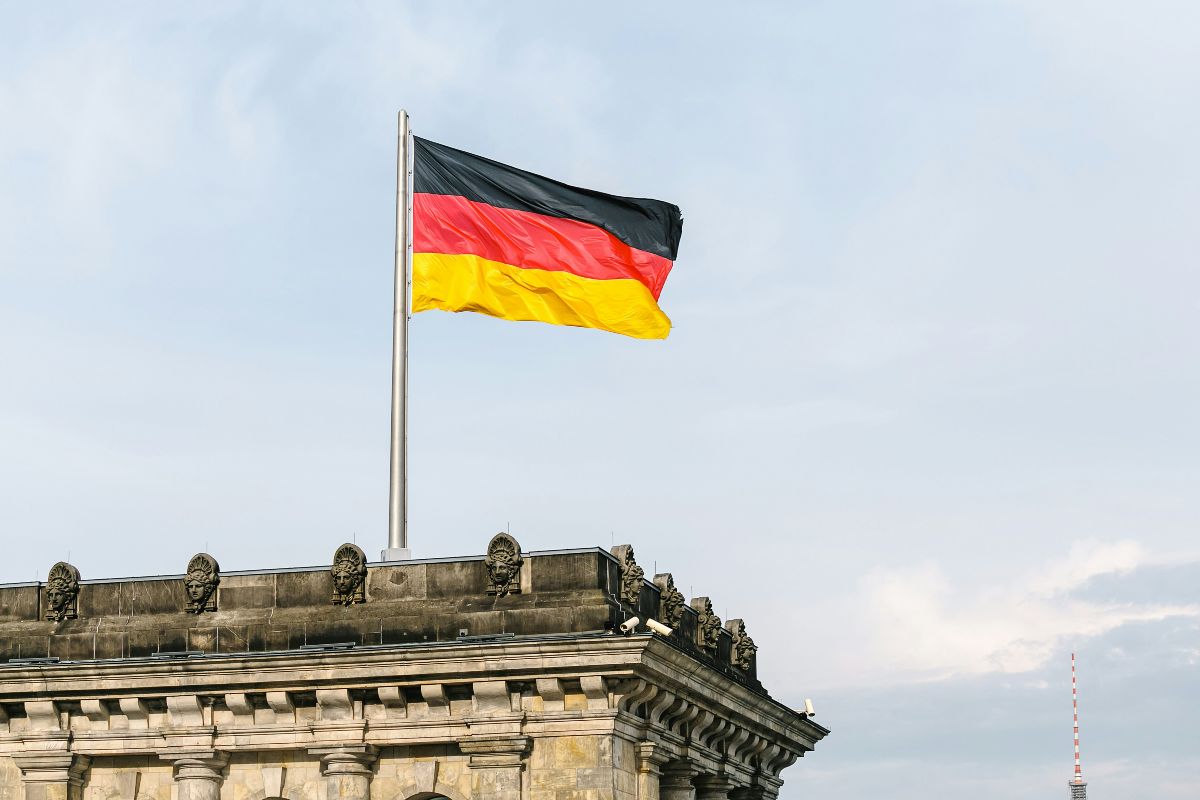
The German parliamentary elections are less than a week away. While there is almost no doubt who will win, the outcome could shake up European politics and economic growth.
On 23 February, at the end of a particularly heated election campaign, Germany will elect a new parliament in an electoral process that is itself more complex than in most countries. The balance of power between the different parties will be decisive in the formation of what is likely to be a new coalition government.
The coalition that governed until November 2024 has collapsed, particularly over economic and fiscal policy. Forming a new government will probably involve political negotiations between the parties – which could progress quickly if the election produces a clear winner but could drag on if it does not. Formulating a new political programme could take months.
However, the question is: what are the parties’ proposals for strengthening the German economy, and which are most likely to be implemented under different political constellations? And what does all this mean for German financial assets and investors?
What is the framework for these elections?
Germany is in the midst of one of its most turbulent election cycles for decades. A series of high-profile violent incidents linked to migrants has pushed immigration to the forefront of the political debate, triggering fierce clashes in parliament and further polarising the electorate.
The implosion of the Ampel coalition – the Social Democrats (SPD), the Greens and the Free Democrats (FDP) – in November marked the culmination of historic infighting.
Olaf Scholz’s government, already deeply unpopular, has collapsed under the weight of economic stagnation, political paralysis and growing public discontent.
But what’s so surprising? The centre-right Christian Democrats (CDU/CSU), long seen as the natural beneficiaries of political chaos, have failed to capitalise on the fallout.
One might have expected the CDU to be riding a wave of anti-government sentiment, but the polls suggest the opposite: it is losing ground. Why? Firstly, voters’ distrust of the established parties runs deep, with many believing that Germany’s structural challenges – from energy insecurity to labour market rigidities – did not begin under Scholz but rather festered under Angela Merkel.
Secondly, migration is proving to be a double-edged sword for the CDU, whose former position on asylum and integration is now haunting it. The AfD has seized on the issue, siphoning off disillusioned voters who see the traditional parties as two sides of the same coin.
The markets do not like uncertainty, with inflation persisting, industrial competitiveness under threat and political direction uncertain: Will Germany emerge stronger from this turmoil, or is this just the start of a deeper structural crisis?
What do the polls say?
According to the latest poll published by Reuters, the CDU/CSU is leading in the aggregate polls by 8 points over the AfD. The far-right AfD has gained 4.6 points since June 2024. The SPD, which currently leads the national parliament, has lost 12.1 points since the last federal election and is currently in third place.
Germany has two centrist ‘big tent’ parties: Scholz’s centre-left Social Democrats (SPD) and the opposition Conservatives, an alliance of the Christian Democrats (CDU) and their Bavarian sister party, the Christian Social Union (CSU). Both parties have lost support in recent years, while smaller parties such as the Greens and the far-right AfD have gained ground.
The SPD, the Conservatives, the Greens and the AfD are all putting forward candidates for the post of Chancellor. The pro-market Free Democrats (FDP), the far-left Linke and the Sahra Wagenknecht Alliance (BSW) are also in the running. According to polls, they all risk failing to reach the 5% threshold needed to enter parliament.
A complex voting system
The German electoral system is notoriously complex, making election results difficult to predict right up to the last minute. As DWS points out, unlike in most countries, Germans vote twice, once for a local candidate and once for a party list. Parties must win at least 5% of the national vote or three direct seats to enter the Bundestag.
This means that small parties, such as the Left or the Free Electors, can bypass the 5% threshold if they win enough direct mandates in specific regions, such as the former Eastern region or Bavaria. The Free Democrats (FDP), despite their historic presence, face a major challenge, as their evenly spread voter base makes it difficult to win direct seats.
With opinion polls showing some parties on the left and right hovering around the threshold, the final composition of the German parliament remains a wild card that will be closely watched by the markets and investors.
What coalitions are possible without a clear majority?
In the absence of a clear majority, several coalition options are on the table, each presenting significant political obstacles. These include:
- According to many analysts, the ‘Kenya coalition’ (CDU/CSU, SPD, Greens) is the only tripartite alliance capable of securing a majority. However, the CSU leader’s strong opposition to the Greens could scupper this scenario.
- The ‘black-green coalition’ (CDU/CSU and Greens) is mathematically possible, but deep ideological divisions over climate and economic policies make this partnership highly uncertain.
- The ‘Jamaica coalition’ (CDU/CSU, Greens, FDP) is another option, but the FDP’s polling numbers – less than 5% – threaten its viability.
- The ‘German coalition’ (CDU/CSU, SPD, FDP) could be considered if the FDP passes the electoral threshold, but the party’s rejection of another ‘traffic light’ coalition makes this option unlikely.
- The ‘grand coalition’ (CDU/CSU and SPD), which governed under Merkel, seems politically unattractive given past frictions and declining support from the SPD.
All the major parties have ruled out any alliance with the far-right AfD and the new BSW party.
What are the programmes of the various parties?
Here is an outline of the programmes of the various German political parties:
- Social Democrats (SPD): Pro-debt, pro-welfare, pro-European. The SPD wants to stimulate public investment by increasing debt, focusing on infrastructure and tax incentives for businesses. It is in favour of increasing taxes on the ultra-rich and raising the minimum wage to €15, while guaranteeing the level of pensions at 48%. On immigration, it aims to speed up asylum procedures while negotiating agreements on economic immigration and deportations. On foreign policy, the SPD remains firmly in favour of NATO, advocating military modernisation and pushing for greater integration of European defence, while balancing relations with China through selective cooperation.
- The Greens (Die Grünen): Climate, tax and immigration reform. The Greens have relaxed their climate targets compared to 2021 but continue to advocate reform of the debt brake and subsidies for electric vehicles. They are proposing a ‘citizens’ fund’ for pensions, partly financed by the state, and want a tax on billionaires to fund social programmes. On immigration, they strongly support the right to asylum, oppose deportations to war zones and reject the outsourcing of asylum procedures to third countries. They criticise the EU’s border policies and emphasise international human rights obligations in migration policy.
- AfD: Anti-EU, anti-immigration, pro-nuclear. The far-right AfD wants Germany to leave the EU and the euro, revive coal and nuclear power, and restore Russian gas imports. It advocates tightening border controls, detaining asylum seekers and cutting welfare benefits for foreigners unless they have worked in Germany for at least ten years. In terms of security, it is calling for the age of criminal responsibility to be lowered to 12, for preventive detention to be introduced and for the recent bans on carrying knives to be abolished. To counter demographic decline, the AfD supports financial incentives for a higher birth rate rather than immigration.
- Free Democrats (FDP): Pro-business, pro-market, anti-welfare expansion. The FDP prioritises market-led pension reform, supporting a pay-as-you-go pension system rather than state expansion. It advocates lower corporate taxes, less bureaucracy and incentives to work rather than increased welfare payments. Welfare recipients would have to prove their efforts to find work, or risk having their benefits reduced. On civil liberties, the FDP opposes mass surveillance, regulation of online content and data retention laws.
- The Left Party: Tax the rich, extend welfare, reduce working hours. The Left Party wants a very high wealth tax, including a 60% inheritance tax on estates worth more than €3 million, to finance a minimum wage of €15 and an increase in retirement pensions to 53% of net income. It proposes a universal pension system, with all citizens, including MPs and civil servants, contributing, and seeks to lower the retirement age to 65 (or 60 after 40 years of contributions). As far as transport is concerned, the party is in favour of strengthening public transport in rural areas, banning flights of less than 500km and limiting the use of private cars in towns and cities.
The debt brake in sight
Germany’s debt brake (Schuldenbremse) is a constitutional rule that limits state borrowing and requires balanced budgets at federal and state level. Introduced in 2009 under Merkel’s leadership, in the midst of the global financial crisis, it aims to prevent future generations from being burdened by excessive debt, by authorising the federal government to take out new loans of up to 0.35% of GDP, an unprecedented restriction among G7 economies.
Although there are exceptions for ‘extraordinary emergencies’ such as COVID-19 and the war in Ukraine, the recent budget crisis erupted because Finance Minister Christian Lindner (FDP) refused to suspend the rule to plug a €10 billion deficit, leading to the collapse of the Scholz government. Critics of the debt brake argue that it cripples Germany’s ability to invest in infrastructure and defence, while supporters insist that it protects long-term fiscal stability – a political impasse that continues to paralyse Europe’s largest economy.
What assets could move? If Friedrich Merz manages to form a solid coalition with the SPD and/or the Greens, then a pro-investment budget reform could see the light of day. Who would benefit?
- Property & Infrastructure: With the simplification of town planning regulations and a plan to modernise infrastructure, property and construction companies could be the big winners.
- Automotive: The CDU/CSU wants to relax CO2 standards and step up support for companies in the sector. A potential rally in German automotive stocks could then break out (Volkswagen, BMW, Mercedes).
- Defence: Increased military spending, coupled with US demands, will favour stocks such as Rheinmetall and Hensoldt.
- Finance: Lower corporate taxes, more growth, and a possible return of capital flows to Germany: German banks and insurers (Deutsche Bank, Allianz, Commerzbank) could see their valuations rise.
- Interest rates: If the debt brake rule is relaxed, the first reaction could be a rise in German bond yields. Why might this be?
- Increase in debt issues to finance investments.
- Growth expectations revised upwards (even marginally).
- Reallocation of flows to equities and private credit.
`Conversely, if the reform is blocked, the bond market could incorporate a scenario of persistently weak growth, keeping yields low and pushing investors towards riskier assets.
- Currencies: A fiscal turnaround in Germany could have a powerful psychological effect on the euro. Less austerity and more investment? It could:
- Restore a little competitiveness to the German economy.
- Narrow the growth gap with the United States, limiting selling pressure on the euro against the dollar.
- Redirect investment flows towards Europe rather than other regions.
- Effect on the rest of Europe: As Germany is the economic lungs of the eurozone, a more expansionary fiscal policy could also benefit its European partners. To put it plainly, German growth revised upwards by 1% could generate +0.1% GDP for France. The result? An acceleration in the momentum of cyclical European stocks (consumer, industrials, financials).
Conclusion
The German elections are not just a political event. They could redefine the economic direction of Europe’s leading power, with major consequences for equities, interest rates and currencies. If the CDU/CSU succeeds in imposing its programme, the equity markets could see a boost of optimism, with a rotation towards cyclical stocks and sectors benefiting from fiscal easing. If not, Germany could become mired in economic stagnation, with bond yields still low and persistent selling pressure on the euro.
Written by John Plassard, senior investment specialist at Mirabaud Group


