
This feature was produced in partnership with Schroders
Sticky inflation, geopolitical shocks and shifting market dynamics have challenged many of the assumptions that investors have relied on for more than a decade. In a more uncertain and regime-driven environment, multi-asset investors may need to think beyond traditional diversification and asset allocation strategies. Sue Whitbread, Editor at Wealth DFM Magazine, spoke to Ella Davies, multi-asset fund manager at Schroders, about why adaptability, using dynamic asset allocation and disciplined risk management processes are becoming increasingly important.
For much of the post-financial crisis period, investors benefited from a relatively stable backdrop of low inflation, ultra-low interest rates and predictable diversification relationships between major asset classes. But recent years have challenged many of those assumptions.
As inflation concerns mount, interest rate expectations shift and geopolitical risks continue to shape markets, investors and advisers are increasingly asking whether traditional approaches to diversification are still enough.
To explore what effective multi-asset investing looks like in today’s more uncertain environment, Sue Whitbread, Editor at Wealth Magazine, spoke with Ella Davies, multi-asset fund manager at Schroders, about investing through uncertainty, the role of dynamic asset allocation, and where she sees the key risks and opportunities for investors over the next 12–24 months.
The last few years have reminded investors that regimes can change quickly. What does ‘investing through uncertainty’ mean in practice for a multi-asset portfolio today?
Ella Davies, multi-asset fund manager at Schroders, responds saying: “There has been a huge amount of change across global markets and the economy in recent years, affecting investors, advisers and their clients. Investing through uncertainty means recognising that markets, as well as many of the relationships which investors had become used to over the past decade, can shift much faster than investors were perhaps accustomed to.
“Beyond geopolitical risks, we have moved from an era of ultra-low inflation to one characterised by worries about higher inflation and higher interest rates as well as greater geopolitical uncertainty, all of which can reinforce those pressures further. In practice, investors can no longer rely on the post-financial crisis investment playbook that dominated markets after 2008. The objective today is no longer diversification for diversification’s sake. Instead, it is about building resilient portfolios that can adapt.
“For a multi-asset portfolio, that adaptability is key. We still believe investors need exposure to growth assets such as equities because consistently timing markets is incredibly difficult. But portfolios also need the flexibility to evolve as conditions change – whether that means adjusting regional equity exposure, being more selective within fixed income, or introducing alternative assets where appropriate.
“Importantly, uncertainty can also create opportunity. Different market regimes produce different winners and losers, and an active multi-asset investment strategy allows us to look across a broad opportunity set rather than being tied to a static allocation over time.
“Ultimately, investing through uncertainty is not about trying to predict every market move. It is about building resilient portfolios that can participate in upside when conditions are favourable, while remaining flexible enough to navigate inevitable shifts along the way.”
Diversification has traditionally been a cornerstone of multi-asset investing. Why might diversification alone be ‘not enough’ now, and where does active management add value?
“Despite all the change we have seen in markets in recent years, diversification remains critically important. The challenge today is to understand that the traditional approaches investors have relied on historically may not work in the same way going forward.
“2022 is a good example. Following Russia’s invasion of Ukraine, the values of equities and bonds fell in tandem. Historically, these asset classes have tended to have a negative correlation, so when one struggles, the other often provides balance, and that has been a key source of diversification in multi-asset portfolios.
“But in 2022 that relationship broke down. Rising inflation prompted central banks globally to raise interest rates, creating a significant headwind for fixed income assets. At the same time, higher inflation and tighter financial conditions weighed on growth assets such as equities. As a result, both sides of a traditional 60/40 portfolio came under pressure, which was a reminder that it cannot be assumed to provide protection in every environment.
“That is why active management becomes more important. It is not only about owning a spread of different asset classes but understanding how those assets are likely to behave in relation to one another across different market environments.
“The challenge today is to understand that the traditional approaches investors have relied on historically may not work in the same way going forward.”
Ella Davies, Multi-Asset Fund Manager at Schroders
“Active management allows portfolios to adapt as those relationships evolve. Government bonds can be an effective diversifier in some environments, particularly when growth is slowing. In periods of higher inflation, however, commodities or other alternatives may play a more valuable role. The key is being selective and dynamic, rather than relying on a more static asset allocation strategy.
“Diversification remains the foundation. But in a more complex and regime-shifting environment, active asset allocation increasingly needs to sit on top of that foundation in order to support better portfolio outcomes for investors.”
When markets are volatile, investors often focus on returns but clearly risk matters too. How does dynamic asset allocation help manage downside risk while still keeping portfolios invested for the long term?
“One of the biggest challenges for investors is staying invested during periods of volatility. Large drawdowns can be uncomfortable emotionally, but they can also undermine long-term outcomes if investors react at the wrong time or are pushed off course by short-term market moves. “Dynamic asset allocation helps because it gives us the ability to adjust portfolios as risks evolve, rather than simply riding market cycles up and down passively. That does not mean trying to predict every short-term move. It is about gradually increasing or reducing risk exposure when we believe the balance of risk and reward has shifted meaningfully.
“For example, if valuations become increasingly stretched or macroeconomic risks rise, we may reduce overall equity exposure or reposition towards more defensive areas of the market. Equally, periods of dislocation can create opportunities to add risk at more attractive valuations. Volatility can represent both risk and opportunity depending on the environment.
“The key point is that this is not about moving into cash or stepping away from markets altogether. It is about helping smooth the investment journey, reducing the severity of drawdowns where possible, while keeping portfolios aligned with long-term objectives and investors fully invested over time.
“We believe that matters even more in today’s environment, where markets are likely to remain more volatile and regime-driven. In that context, dynamic asset allocation can play an important role in helping investors stay invested through uncertainty, rather than reacting to it.”
In a more complex market environment, what capabilities do you think matter most in a multi-asset investment management team?
According to Davies, it is a combination of factors which can make the biggest difference, as she explains: “One of the key strengths of Schroders’ multi-asset capability is the breadth of the global platform and resources we can draw upon. We benefit from having investment professionals working across the globe, which gives us access to local expertise and market insight from around the world.
“What is particularly valuable is that this expertise is not siloed. We work collaboratively across the same global platform, sharing perspectives and challenging views across regions and asset classes.
“From a research perspective, our multi-asset team also benefits from significant strength and depth. We engage closely with specialists across equities, fixed income and other asset classes, while maintaining an independent investment process. Our views are strengthened by Schroders’ global research capabilities, but our portfolio decisions are ultimately made independently within the multi-asset team.
“For us, that combination of breadth, depth and independent thinking is particularly important, particularly in today’s more complex and rapidly changing investment environment.”
For advisers and investors looking ahead over the next 12–24 months, where do you see the biggest risks, but also the opportunities, for a flexible multi-asset fund strategy?
“The starting point has to be the macroeconomic backdrop and geopolitical risks, because these are increasingly shaping market outcomes. One of the key risks is the potential inflationary impact of geopolitical disruption, particularly if we were to see a prolonged rise in energy prices. That could create a scenario where inflation proves more persistent, prompting central banks to tighten interest rate policy further.
“In the shorter term, however, we believe that there are still selective opportunities within equities. Artificial intelligence remains one of the most significant investment themes, and while it has already driven markets for several years, we still see scope for further growth. Many of the companies leading this trend continue to generate strong cash flows, and some are now beginning to monetise the substantial investment they have made.
“One of the biggest challenges for investors is staying invested during periods of volatility.”
Ella Davies, Multi-Asset Fund Manager at Schroders
“Looking further ahead, if inflation remains structurally higher, investors may need to think differently about portfolio construction. That could mean reassessing exposure to fixed income and considering a broader range of alternative assets.
“For flexible multi-asset strategies, the key is maintaining the ability to adapt as these risks and opportunities evolve, rather than being anchored to a static allocation.”
Focusing on resilience for the longer term
In an environment defined by shifting inflation dynamics, evolving correlations and heightened geopolitical risk, the traditional assumptions underpinning multi-asset portfolio construction are being tested. As Ella Davies highlights, diversification remains essential, but it may no longer be sufficient on its own to navigate today’s more complex market regime.
Instead, the focus is increasingly turning to adaptability, through active asset allocation, disciplined risk management and a willingness to reassess exposures as conditions change.
For advisers and their clients, the key challenge is ensuring that multi-asset portfolios are built not just to respond to uncertainty, but to remain resilient through it over the long term.
Ultimately, the objective remains unchanged: to help clients stay invested and positioned to meet their long-term financial goals, whatever form the next market regime takes.
Click here to find out more about Schroders

This feature first appeared in the 2026 edition of Multi-Asset Fund Insights. To explore the full report, please click here.
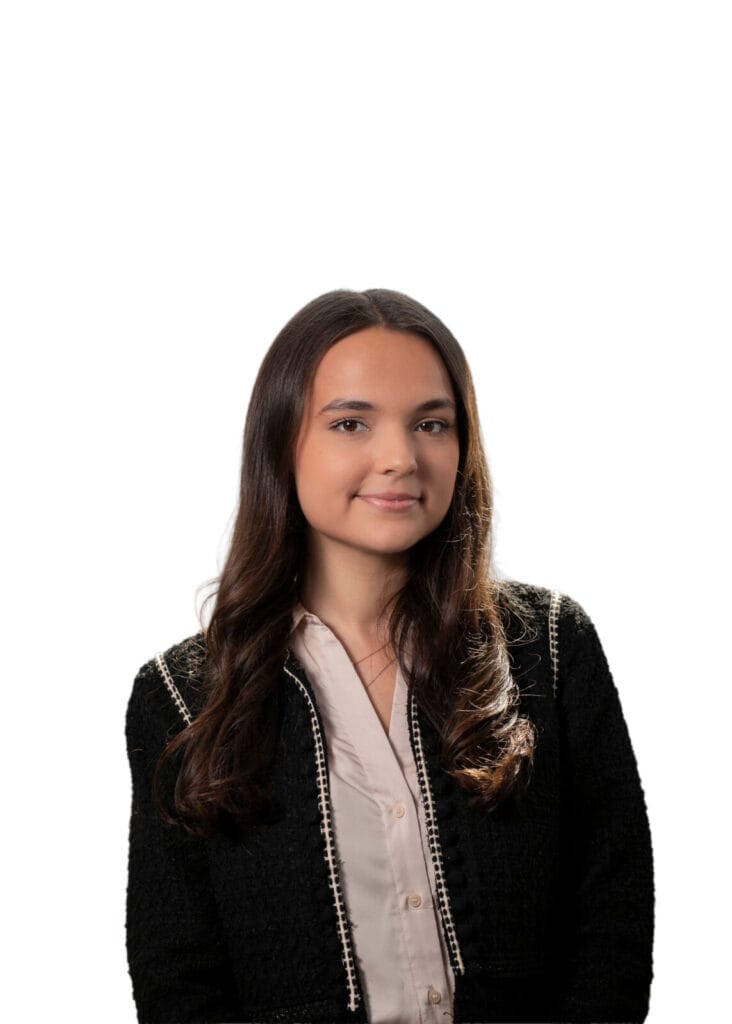
Ella Davies
Multi-Asset Fund Manager at Schroders
Ella joined Schroders in 2020 and is a Multi-Asset Fund Manager based in London. She works alongside Philip Chandler co-managing assets for UK wealth management clients and the management of the Schroder Global Multi-Asset Portfolios. Ella is also a member of the Equity and Foreign Exchange Research Groups within Multi-Asset Investments at Schroders. She holds a degree in Mathematics and Philosophy from King’s College London and is a CFA Charterholder.