For instance, FactSet reports that as many as three-quarters of S&P 500 firms have mentioned inflation in their earnings calls for the Q4 season, but on average, net profit margin estimates for 2022 haven’t changed. Companies appear confident in their pricing power—and January’s forecast-beating US retail sales growth suggests that confidence is not misplaced.
But with every passing week in which the data keeps ticking up, we see it raising policy risk for investors. Time and market forces will ultimately ease this current bout of high inflation, but as we note above, some of the current supply-side bottlenecks could cause problems for years, not months. Moreover, as we’ve been writing since last year, we also see structural forces marking an inflection point between the low inflation of the past 20 years and persistently higher inflation over the coming cycles.
If a modest set of rate hikes fails to slow inflation because it has more to do with queues outside ports than over-leveraged consumers, the US Federal Reserve may risk overly rapid tightening in a bid to get some traction. That is not the view of our fixed income team—which anticipates a measured approach from a Fed that is alive to this complex mix of transitory and structural inflationary forces—but it does appear to be the current view from the market, and that could be a source of volatility.
Checkers or Chess?
Even if it gets the balance right for the US, the Fed, in essence the world’s central bank, could also find itself setting a policy for the US that is unnecessarily tight for the rest of the world.
Although Europe may be particularly exposed to energy price volatility due to tensions over Ukraine, it’s becoming clear to us that, for various reasons, the US is generally suffering more acute supply bottlenecks than other regions.
For example, European governments generally kept people in their jobs through the pandemic by contributing to the pay of “furloughed” workers, whereas the US chose to support the unemployed. That may be one cause of the imbalance and relative tightness in US labour markets.
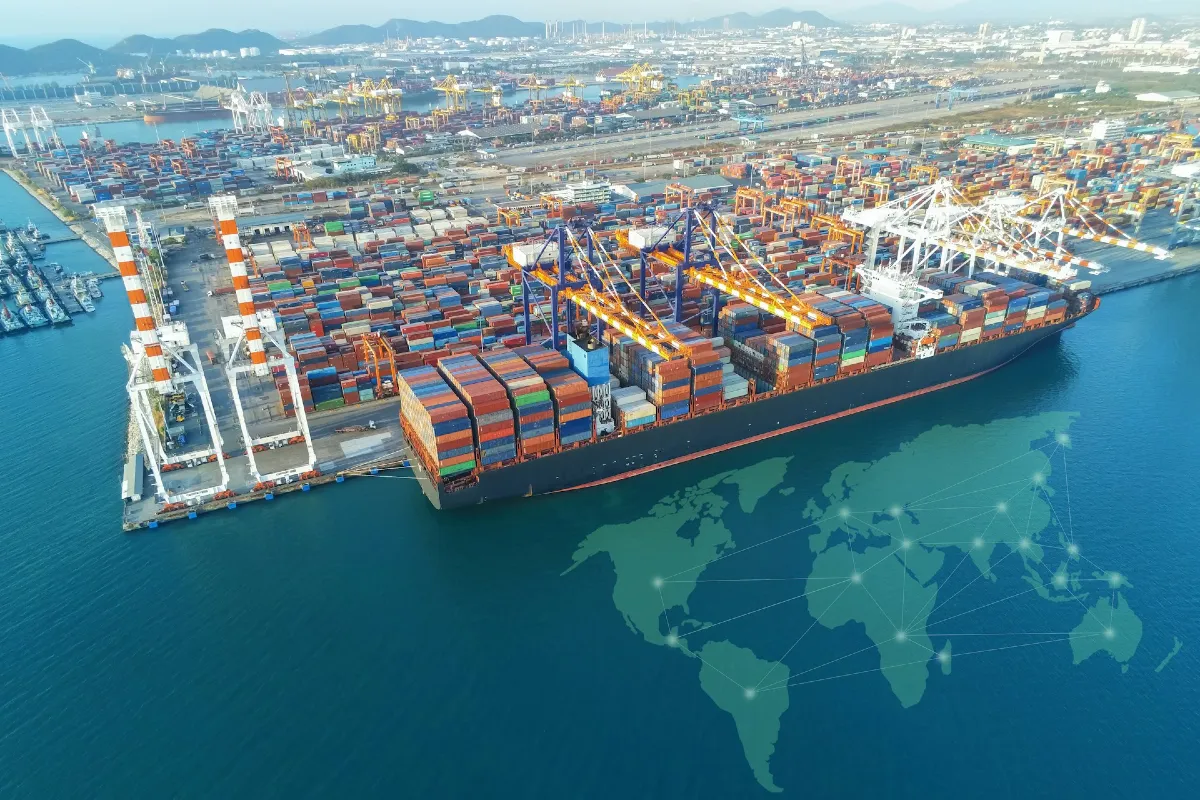
And to pick just one part of the goods supply chain, when the World Bank and IHS Markit published their first Container Port Performance Index last year, the most efficient U.S. port was Philadelphia, down in 83rd place. Los Angeles ranked a lowly 328 out of 351. Ports in Asia, the Middle East and North Africa dominated the higher rankings. Algeciras in Spain took Europe’s top spot, ranked 10th overall.
Factors such as these mean that Asia and Europe could use more accommodative policy than the US We believe it would help the European Central Bank avoid setting a policy that might widen peripheral eurozone spreads to uncomfortable levels. It could enable Japan to sustain the economic growth it achieved last year—its first year-over-year expansion since 2018. And it could help China limit this year’s slowdown—the People’s Bank of China is now easing policy, just as the US prepares to tighten.
We believe this is why market participants are so focused on inflation, the underlying drivers of that inflation, and the messaging out of the Fed. Should the central bank end up playing demand-side checkers when the economy is playing supply-side chess, it could cause problems both domestically and worldwide. This is one important reason why we expect continued volatility in markets this year.