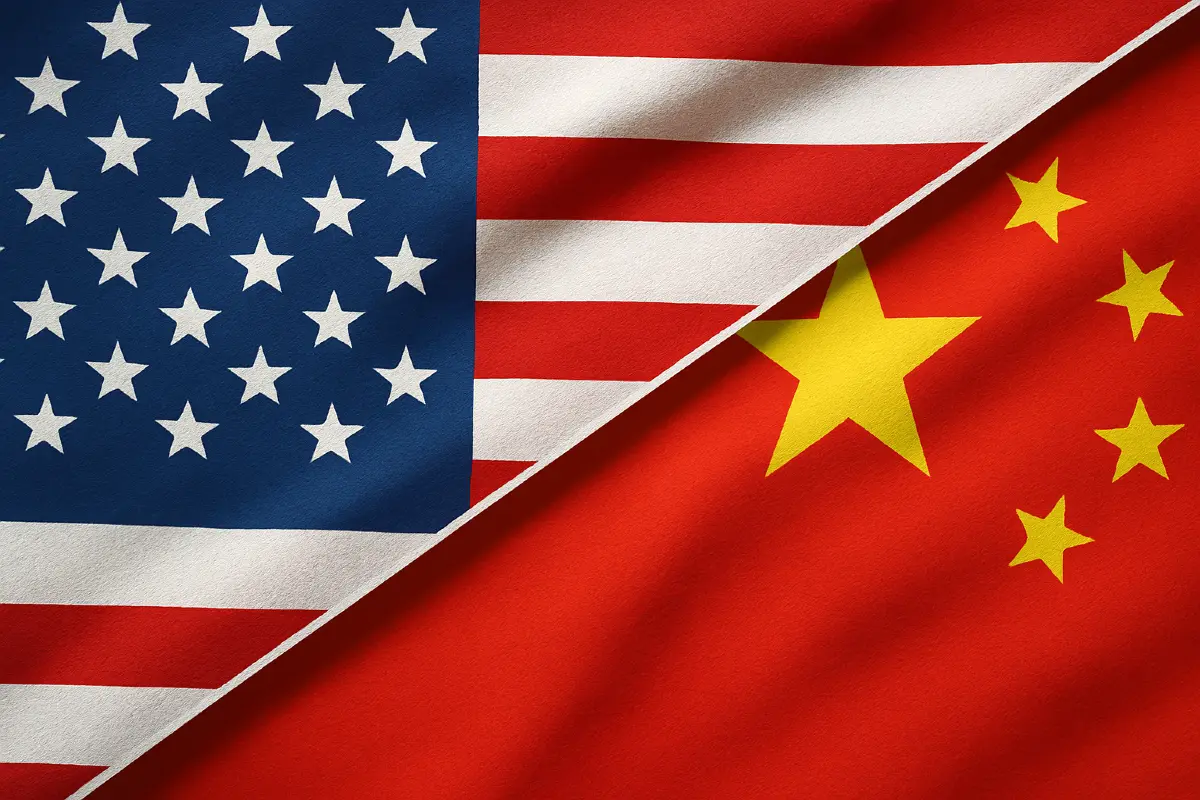
As tensions between Washington and Beijing flare once again, Quintet Private Bank’s Chief Investment Officer, Daniele Antonucci, assesses President Trump’s threat to impose sweeping tariffs on Chinese imports and what it could mean for markets, inflation, and investment strategy.
“US President Trump has threatened a 100% tariff on all Chinese imports by 1 November in response to China’s trade restrictions on rare earths – which are critical for production in technology across industries.
“In turn, China’s move was a retaliation following earlier restrictions from the US on chips.
“This is happening ahead of a possible meeting between Trump and China’s leader Xi Jinping on the sidelines of the Asia-Pacific Economic Summit in South Korea, between 30 October and 1 November, which many business leaders and investors see as a key meeting to find a more durable trade arrangement or at least pause tariffs to allow negotiations.
“Our initial thoughts are that this is likely a negotiating threat, not an implementable plan, certainly not for a sustained period. This is because US corporates rely heavily on China for intermediate goods; imposing across-the-board tariffs would cause supply-chain chaos and push up inflation just as the Fed is easing.
“This preliminary baseline suggests that we might go through an initial period of equity market volatility, especially in cyclicals and tech hardware, followed by some relief if back-channels signal moderation or willingness to compromise – as Trump and Vice President Vance appear to have suggested over the weekend.
“China may retaliate symbolically at first, for example via tightening export licences for rare earths or targeting US agribusiness – but avoid a full-scale trade war until it gauges Trump’s resolve.
“Historical precedents, looking at Trump’s first presidency, suggest a pattern of escalation as a tactic of negotiation followed by de-escalation: in 2018-19, he escalated tariffs, then de-escalated into “phase one” deals ahead of election season.
“With the US mid-terms approaching, and the need to support the economy, we think this is a useful comparison and a rather likely scenario.
“Tariff threats create leverage for renegotiation. Once the headlines peak and inflation pressures resurface, the US might rebrand a partial rollback as a “win”.
“Congress and big business lobbies (retail, autos, technology) will likely resist full implementation – limiting endurance.
“So, at this stage, we expect a pattern of rhetorical peak followed by a negotiated retreat, perhaps with selective deals and provisions in critical sectors, components and commodities (chips, AI, batteries, rare earths) rather than blanket tariffs.
“Longer term, the pattern is still one of geopolitical fragmentation and trade regionalisation, with an adversarial US-China relationship.
“Both the US and China will likely continue to boost production of strategic inputs (semiconductors, clean tech, defence materials) supported by subsidies and regulation.
Investment Strategy
“Our strategy remains anchored in broad diversification across geographies and asset classes, with a moderate tactical preference for equities over bonds, plus a range of risk mitigators and active management as the key to navigating this environment.
“Earnings, especially in tech, are strong enough to support valuations. Still, spreading investments across countries and investment styles is more important than ever.
“We maintain tactical overweights relative to our long-term allocation targets in the US, Europe, Japan and emerging markets.
“Earlier this year, we diversified some of our US equities using an equal-weighted index that gives more room to sectors poised to benefit from fiscal stimulus and deregulation, such as industrials and financials.
“Where appropriate, we’ve added a form of portfolio ‘insurance’ – a warrant that rises if US equities fall. It’s not a silver bullet, but it helps partially cushion unexpected shocks for investors comfortable with more complex instruments.
“In fixed income, we favour European bonds over their US counterparts, with a preference for short-dated bonds, to manage inflation and interest rate risk.
“Our government bond positioning is defensive and will likely benefit during periods of equity market volatility.
“We’re holding strategic positions in commodities and inflation-linked bonds to mitigate the risk of persistent inflation.
“Gold also plays its role as a store of value in geopolitically uncertain times. That’s why we’re tactically overweight.”